 Richard Seidl
1 min read
Cypress, Playwright or WebdriverIO
In test automation, three tools are currently in the spotlight: Cypress, Playwright, and Webdriver I/O. For a long time, Cypress was considered the...
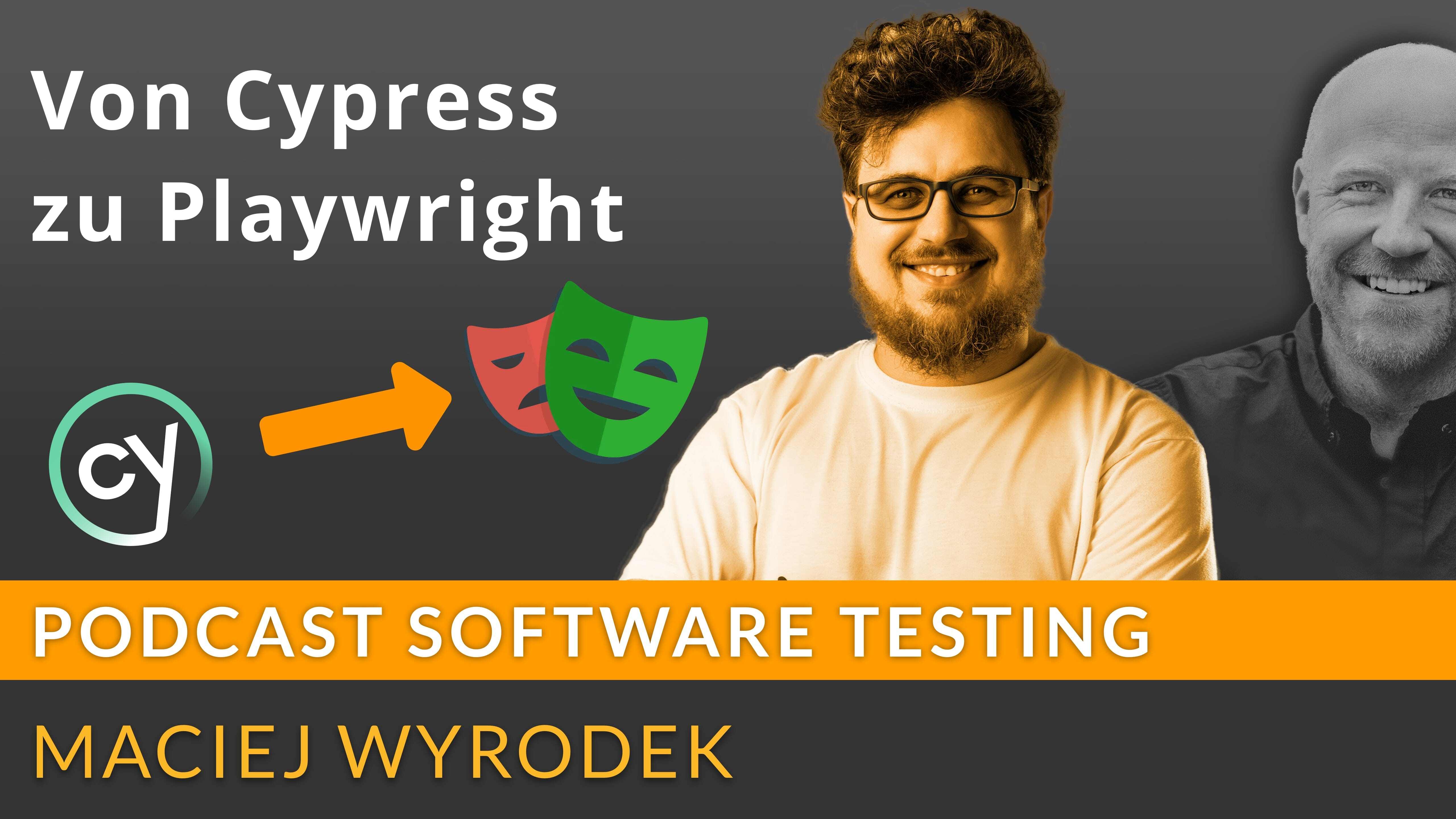
The migration from Cypress to Playwright comes with several challenges. Limitations within the Cypress testing framework, particularly regarding plugins, parallelization, and framework selection, can be key reasons for making the switch. Migrating to Playwright requires a strategic and step-by-step approach. Additionally, test conversion and the associated challenges in test maintenance are important aspects to consider when transitioning from Cypress to Playwright.
In this episode, I talk with Maciej Wyrodek about migrating from Cypress to Playwright. Maciej shares insights into his team's decision to switch, the challenges they encountered, and how a hackathon helped structure the selection process. We also discuss the limitations of Cypress, particularly regarding plugins, parallelization, and framework choices, as well as strategies for a step-by-step migration. Additionally, we explore the role of AI in test conversion and the challenges of test maintenance.
"The transition wasn't as easy as we thought. Even after all the research, surprises kept coming-like differences in how session management works between Cypress and Playwright." - Maciej Wyrodek
Maciej Wyrodek is a knowledge seeker, Quality Consultant, Mentor and Trainer - specialised in process improvement, and Test automation.Maciej is always looking for a new opportunity to challenge and hone his skills. He has gathered experience working for different companies with different working models, From small to big corporations, From Product via In-house development to software house. Thanks to that he has a wide perspective on testing quality and delivering value.During his stay in Dublin he realised his passion: Knowledge sharing.His strong belief is that what makes us human is the ability to learn and share knowledge.That is why for the almost decade he has been doing his best to give back to the IT community, by writing articles, recording videos on his channel Itea Morning and speaking on conferences.



Test automation frameworks are an important tool for testers, as they greatly influence efficiency and effectiveness in quality assurance (QA). This article deals with the migration of the Cypress testing framework to Playwright and highlights important aspects of test automation:
Choosing the right test framework affects efficiency and scalability in quality assurance. While Cypress is a solid choice for many projects, teams are increasingly reaching their limits—whether in terms of flexibility, performance, or integration options. Playwright has established itself as a powerful alternative that not only better meets modern web automation requirements but also enables greater test coverage. Below, we look at some aspects that speak in favor of switching.
When comparing the features of Cypress and Playwright, there are several differences that impact test automation.
Cypress is known for its fast learning curve. It uses a dedicated language for writing tests, which can be appealing to new users. The idiosyncratic way of writing tests in Cypress allows developers to quickly understand the structure of the framework, making it user-friendly.
Playwright is excellent at managing complex applications that use iFrames and scrolling. Its robust architecture makes it a preferred choice for teams working with complicated web elements. This capability is especially important when testing applications that require seamless interaction with multiple layers of content.
Cypress offers a variety of plugins that extend its functionality. However, maintaining these plugins can be challenging. Frequent updates and compatibility issues can lead to interruptions in the testing process. In comparison, Playwright has built-in solutions that reduce dependence on external plugins, simplify maintenance, and improve stability.
The cost-intensive parallelization in Cypress can strain the QA budget, especially for teams that require extensive test runs. Playwright offers a more cost-effective solution by providing cost-efficient parallelization options. This feature allows tests to be scaled efficiently.
Both frameworks have different strengths and weaknesses that are tailored to different testing requirements. Teams considering migration or looking to optimize their test automation strategies should weigh these points carefully.
The transition from Cypress to Playwright should always begin with a thorough investigation of the available migration tools. This allows for a comprehensive comparison of functionality and performance, tailored to the team's testing requirements.
There are several challenges that may arise during initial setup:
To ensure a smooth transition and maintain test integrity, it makes sense to first transfer the critical test cases to Playwright and then gradually phase out the Cypress tests. Adapting the tests to the structure and functions of Playwright makes it possible to improve the overall quality of automated testing and create a solid foundation for the further development of automation procedures.
AI can make test creation more efficient. For example, AI agents such as ChatGPT can be used to create Puppeteer scripts more efficiently. This approach also enables more sophisticated test scenarios. QA teams that use AI can focus entirely on writing and optimizing their tests instead of writing manual scripts. In addition, AI can help reduce human error in test writing and ensure that scripts are consistent and reliable.
In a practical example, various tests were prepared for the switch to Playwright to check the most important functions of the application. These tests included navigating through various pages such as homepages, product pages, menus, collections, brand pages, and other functions of the application, simulating user interactions.
Each test was designed to cover critical paths within the application to ensure comprehensive coverage during regression runs. Complete regression tests several times a day allowed the quality of the software to be continuously verified.
The integration of AI supported the switch from Cypress to Playwright and maintained the high standard of test automation.
During the "critical phase" of the transition from Cypress to Playwright, transitional difficulties can arise, especially when teams are under pressure to rewrite old tests. The following strategies help to manage the workload and maintain productivity:
Ongoing tasks are always a challenge due to competing priorities. A structured plan and fixed time slots for implementation are therefore particularly important.
Other helpful measures during the transition include:
Schedule for the transition: It is important to draw up a schedule for when the transition should be completed so that there is enough time for training and adjustments.
AI editors, such as Cursor, help translate Cypress tests into Playwright. The advantages of this are:
Choosing the right test framework has a major impact on the efficiency and effectiveness of quality assurance. Switching from Cypress to Playwright opens up new possibilities for test automation. AI-powered tools such as Cursor can accelerate this transition by simplifying migration and helping to automate tasks. Careful selection and adaptation of the test framework helps to ensure software quality in the long term.
Cypress has a clear test creation, making it user-friendly for beginners. Playwright, on the other hand, excels at handling complex scenarios such as iFrames and scrolling and offers better support for demanding applications. Playwright also offers cost-effective parallelization options compared to Cypress.
QA teams can face challenges with Cypress, especially with high parallelization costs that can put a strain on budgets. Migrating to Playwright can reduce these financial burdens while improving testing capabilities, especially for complex applications.
Migration can present initial challenges, including evaluation of tools and integration issues. It is critical to plan the transition effectively and manage the workload during peak seasons when old tests are rewritten under deadline pressure.
AI-driven tools can help create Puppeteer scripts, streamlining the process of test creation. By using AI, teams can improve the efficiency of automated test execution and ensure comprehensive testing across different functionalities.
To effectively manage workload during migration, it is essential to carefully plan capacities, prioritize tasks based on urgency, and involve front-end developers in the test automation process. This helps distribute responsibilities and ensures continuous progress.
Choosing the right testing framework is critical as it directly impacts the efficiency and effectiveness of QA processes. The right choice can streamline workflows, reduce costs and improve overall product quality while adapting to future automation requirements.
1 min read
In test automation, three tools are currently in the spotlight: Cypress, Playwright, and Webdriver I/O. For a long time, Cypress was considered the...

1 min read
User interface testing is crucial for the overall quality of software and its user experience. . Web component testing can be used to ensure that...

1 min read
A team faced growing friction in end to end tests and made a clean comparison of Cypress and Playwright. Opinionated workflows, plugin churn, iframe...