 Richard Seidl
1 min read
Change Makes of Breaks Teams
Change in technology is a complex topic that often faces resistance. Good ideas can struggle if they rely only on logic, overlooking the emotional...

Living agility goes beyond following frameworks. Success lies in scaling skills rather than just applying structures. Connecting strategic goals to team actions is key, yet quality often falters due to management pitfalls. Breaking down testing and improvements into manageable steps can make Agile truly effective. The focus is on ensuring that practices have meaningful impacts, transforming the way teams work and think in their everyday processes. This journey towards effective agility empowers teams to achieve more.
In this episode, I chat with Derk-Jan de Grood. We explore what it means to live agility beyond just following frameworks. Derk-Jan shares insights on scaling skills over frameworks and connecting strategy to team actions. We discuss common pitfalls where quality often falls through the cracks, particularly at the management level. There's a focus on breaking down testing and improvement into small, actionable practices. It's all about making Agile effective and meaningful.
"If you don't know when you're going to accept, how can I know what I need to test?" - Derk-Jan de Grood
Derk-Jan de Grood works as a Principal Consultant and Inspirator at InnSpire.He helps organizations take the next step in their agile transformation and improve the flow of value delivery. As an Agile Transformation Consultant, RTE Coach, and Value Delivery Expert, Derk-Jan is passionate about optimizing the development process. He actively collaborates with leaders, RTEs, Scrum Masters, and Product Owners to co-create effective solutions. While he is not afraid to lead by example, his main goal is to empower people within the organization, help them grow, and encourage them to embrace agile values.With his enthusiastic and engaging approach, Derk-Jan inspires the people he works with. He is a sought-after speaker at international conferences, a frequent columnist, and a regular contributor to various industry magazines. He shares his insights and experiences through his blog and his monthly podcast series. Derk-Jan is also the author of several bestselling books.



Built-in quality is a foundational concept in modern software development, emphasizing that quality must be embedded throughout every stage of the process rather than inspected in at the end. As a software quality coach and value delivery expert often highlight, maintaining high standards continuously prevents costly defects and accelerates delivery.
Key aspects of built-in quality include:
This article unpacks how agile methodologies foster built-in quality, the evolving roles within agile teams, common challenges faced in quality management, and practical approaches to embed quality effectively. You will also find insights on scaling agile with a strong focus on sustaining built-in quality across larger organizations. The goal: help you understand how to make quality an integral part of your software development lifecycle.
Agile methodologies promote built-in quality by embedding collaboration and continuous improvement into the development process. Agile teams operate with shared responsibility for quality, where developers, testers, and quality specialists work closely together to detect issues early and prevent defects from reaching production. This collaborative environment encourages transparency and fast feedback loops, essential for maintaining high standards.
The distinction between living agility and merely following frameworks like Scrum is critical. Many organizations treat agile as a checklist or a rigid set of rules rather than a mindset focused on adaptability and value delivery. Living agility means embracing agile principles in daily work—prioritizing responsiveness, learning, and empowerment over strict adherence to processes. This approach transforms agile teams into dynamic units that continuously evolve their practices to enhance quality.
Starting an agile transformation with the why—understanding the purpose behind adopting agility—is fundamental. Shifting focus from just implementing frameworks to becoming value delivery experts changes how teams measure success. Agile is not just about completing sprints or ceremonies; it’s about delivering meaningful outcomes that align with customer needs and business goals.
The Scrum framework serves as a useful guideline but should not become an end in itself. Treating Scrum like a Jenga tower—where one misplaced block can destabilize the structure—illustrates the risk of rigid compliance without comprehension. Teams must engage deeply with agile principles to embed quality throughout their workflows rather than relying solely on prescribed rituals.
Key points on agile's role in built-in quality:
This mindset shift enables agile teams to build quality into every step rather than inspecting it in later stages.
Technical excellence stands at the core of maintaining built-in quality in software development. Practices like continuous integration and continuous deployment (CI/CD) are essential to ensure that quality is not an afterthought but embedded throughout the delivery lifecycle. The CI/CD pipeline acts as a backbone, allowing teams to integrate code frequently and deploy automatically, which helps catch defects early and deliver reliable software consistently.
Automated testing plays a crucial role within these CI/CD pipeline integrations. By embedding automated tests into the deployment process, teams gain confidence that every change meets predefined quality standards without manual bottlenecks. This reduces errors in production and accelerates feedback loops, making it easier to maintain high standards even as complexity grows.
Innovation and skill development arise from small actionable practices implemented regularly by teams and organizations. These range from incremental improvements in coding standards to adopting new testing techniques. Such practices create an environment where continuous learning is part of daily work rather than occasional training events. The result is a culture where technical skills evolve alongside agile mindsets, reinforcing quality at every stage.
Developers play a crucial role in upholding the quality of the product within agile teams. Their core responsibility involves implementing coding best practices, conducting code reviews, and ensuring that the software meets the defined quality standards.
Testers and quality specialists are no longer limited to executing repetitive testing tasks but are now strategic contributors in agile teams. They actively participate in test automation, exploratory testing, and collaborating with developers to identify potential issues early in the development process.
Agile teams are structured to include members with specialized skills who are organized into guilds or chapters for effective knowledge sharing. This structure promotes cross-functional collaboration, continuous learning, and shared responsibility for maintaining Built-in Quality within the team.
Agile methodologies have transformed the software development landscape, prioritizing flexibility and customer collaboration. However, even within this dynamic framework, certain challenges can hinder the pursuit of quality.
One of the most common challenges faced by Agile teams is the presence of unclear acceptance criteria and ambiguous usability testing scopes. When these aspects are not well-defined, it becomes difficult to gauge whether a feature meets the desired quality standards or if it aligns with user expectations.
For instance, consider a scenario where a team is developing an e-commerce application. If the acceptance criteria for a checkout feature simply states "the checkout process should be seamless," it leaves room for interpretation. Does it mean there should be no loading times? Or does it imply that users should be able to complete their purchases in three clicks?
Such ambiguities can lead to miscommunication between team members, resulting in rework and delays. To overcome this challenge, it is crucial to establish clear and specific acceptance criteria from the outset. This can be achieved through collaborative discussions involving product owners, designers, and developers.
Another hurdle that Agile teams often encounter is management's lack of awareness regarding the significance of quality processes. In some cases, decision-makers may prioritize speed over quality, believing that delivering features quickly will satisfy customers.
However, this approach can have detrimental effects in the long run. Rushing through development without proper testing or review can result in buggy releases, leading to dissatisfied users and negative reviews.
To address this issue, Agile teams need to proactively communicate the value of quality processes to management. This can be done by sharing metrics such as defect rates or customer satisfaction scores that highlight the impact of quality on business outcomes.
Despite being part of an Agile setup, many teams still grapple with 'old school' problems that impede their ability to maintain consistent built-in quality. These issues could include:
To overcome these challenges, Agile teams must actively seek ways to improve their existing practices. This could involve investing in test automation tools, establishing a culture of thorough code reviews, or aligning everyone's understanding of DoD through discussions and workshops.
By addressing these challenges head-on, Agile teams can create an environment where quality is prioritized at every stage of development – from planning and design to implementation and delivery.
Quality should never be an afterthought in software development. Instead, it should be an integral part of the process, embedded at every stage from planning to deployment. This is where built-in quality practices come into play.
Built-in quality practices are techniques and strategies that aim to prevent defects and errors in software development rather than just identifying and fixing them later. These practices can be applied throughout the software development lifecycle (SDLC) to ensure that quality is maintained at every step.
Implementing built-in quality practices has several benefits for software development teams and organizations:
To effectively implement built-in quality practices, organizations can conduct practical workshops tailored to their specific needs. These workshops offer extensive training on various techniques and strategies that can be applied in software development processes.
The number of techniques covered in these workshops can vary depending on the organization's requirements:
These workshops provide hands-on training, case studies, and real-world examples to ensure participants understand how to apply these practices effectively.
By incorporating built-in quality practices through practical workshops, organizations can achieve significant improvements in cost reduction, speed enhancement, and error minimization within their software development processes.
Scaling agility in large and medium organizations requires deliberate strategies that preserve built-in quality throughout complex value streams. Many enterprises struggle to maintain consistent quality when multiple teams, departments, and layers of management are involved. Addressing this challenge demands a systemic approach centered on value flow and prioritization.
Key strategies for scaling agility with built-in quality include:
Understanding how work moves from ideation to delivery across the entire organization allows you to identify bottlenecks and quality risks early. Value flow management ensures that every step contributes directly to customer outcomes without unnecessary delays or rework.
Large initiatives break down into epics, features, and stories. Prioritization becomes critical—focus on the highest-value work while balancing technical dependencies and quality considerations. Refinement roles act as gatekeepers who continuously clarify acceptance criteria, usability scopes, and technical requirements, preventing ambiguity that can derail quality.
Beyond processes, scaling agility demands a mindset shift across all levels—executives, managers, teams—to view quality as a shared responsibility. This mindset promotes proactive problem-solving rather than reactive fixes after defects appear.
Organizing experts in testing, development, and architecture communities fosters knowledge sharing and continuous skill development. These groups help maintain technical excellence standards essential for sustainable built-in quality.
Drawing on proven techniques—ranging from 75 up to 150+ built-in quality practices—enables organizations to tailor their approach based on maturity and context. These practices reduce costs by cutting wasteful activities, accelerate delivery by minimizing delays, and decrease production errors by embedding testing and automation early.
Large organizations that embrace these principles align their entire software development ecosystem around delivering continuous value without sacrificing quality. The result is agility that scales effectively—helping businesses respond faster to change while maintaining high standards their customers expect.

1 min read
Change in technology is a complex topic that often faces resistance. Good ideas can struggle if they rely only on logic, overlooking the emotional...
1 min read
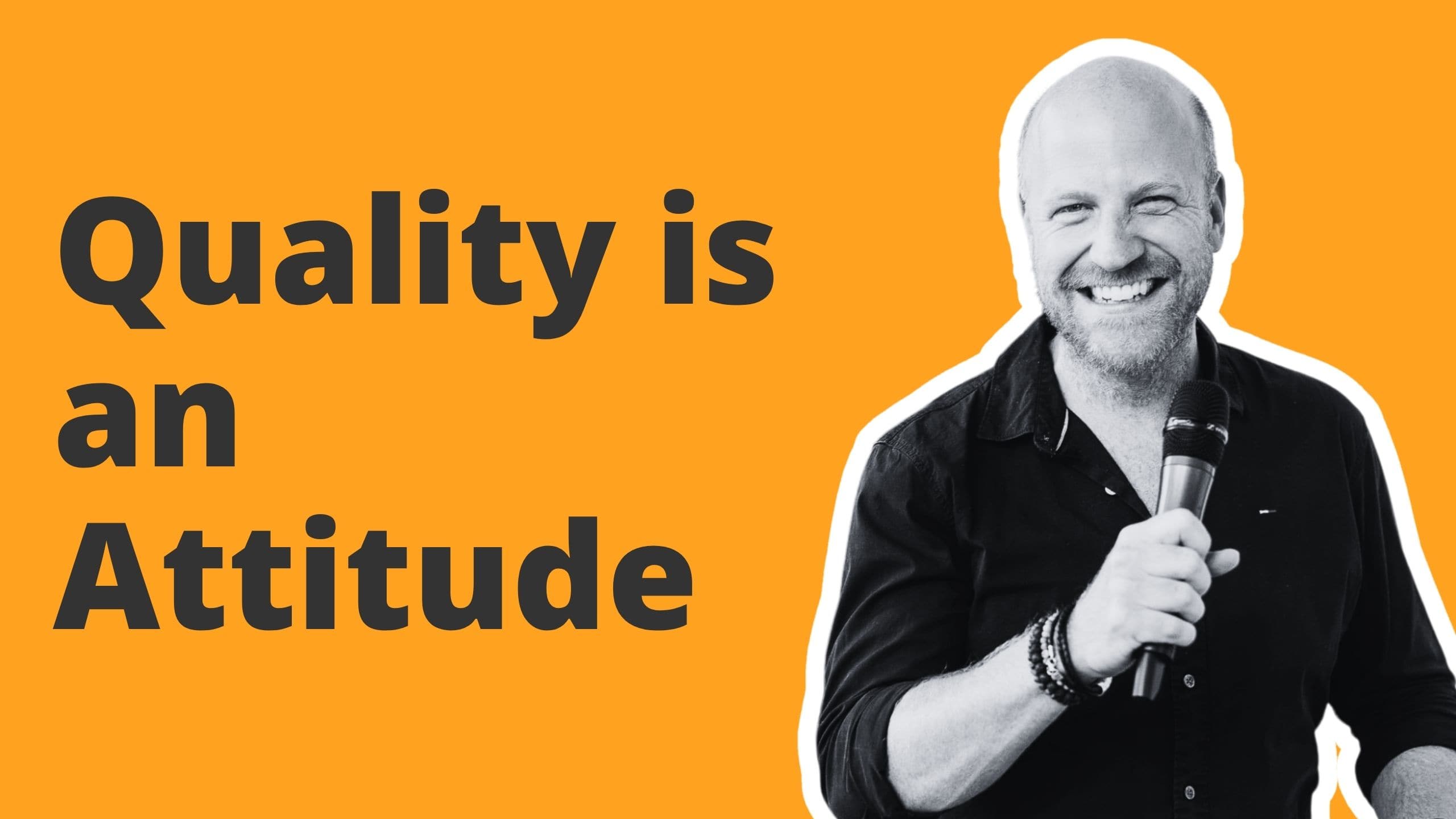
When thinking of software quality we have to see the importance of a quality-conscious mindset. In the rapidly changing technology landscape,...

1 min read
Budget pressure often pushes quality to the edge. Shortcuts look cheap, then cost more in defects, outages, and trust lost. AI and low code speed...