Faster Horses: Why AI Rewards Teams That Talk to Each Other
Using AI for our old tasks just gives us faster horses. As the next abstraction layer, AI rewards precise intent and teams that talk to each other.
AI and automation are changing the work of testing, and every technical decision reaches beyond the project. This hub looks ahead: at the future of testing, at new roles, and at the responsibility that comes with those decisions.
The articles and podcast episodes explore trends and future scenarios, an interview series on the future of software testing, sustainable and resource-efficient software, and ethical questions around generative AI. Many pieces tie this to attitude: meeting new things with curiosity, staying calm about what you cannot control, and keeping people at the centre. The underlying tone is realistic optimism.
Using AI for our old tasks just gives us faster horses. As the next abstraction layer, AI rewards precise intent and teams that talk to each other.

Agile ways of working spark more eye rolls than motivation today. Agile isn't dead, though: now is the time for real agile that is individual and human.
Simply accepting AI output creates no bond with the result. Ownership of code, architecture and tests grows from working through them yourself.

Kamchatka 2008 with books instead of a ChatGPT itinerary: what the double compression of time and work does to us, and why deliberate brakes help.

A waiting room without a smartphone, and suddenly a thought appears. Why our brains need idle time and why boredom is an incubator for ideas.
The risks of open source software go beyond cost: licenses, maintenance, support and quality. So test it yourself and give back to the community.

Caught in the AI hype cycle? Total refusal rarely works. Small steps and Gartner's model help you stay calm and alert amid the constant AI noise.

AI text floods and vibe coding can feel overwhelming. Three things keep me calm: shifting my focus, taking a step back and the ideas of the Stoics.
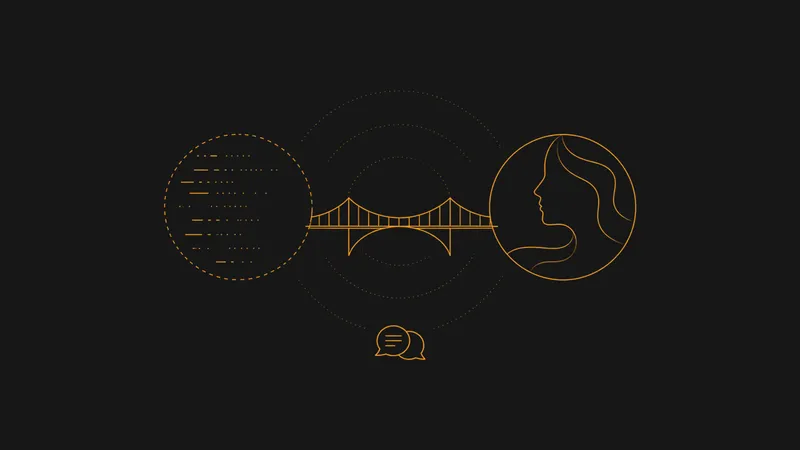
The future of testing lies not in better tools but in humanity. Why testers are the interpreters between AI, code, and the people behind it.
Should AI programming languages stay readable for humans? If AI writes the code, compilers and syntax may change. What that leaves for developers.
Software developer responsibility grows as code shapes safety, fairness and daily life. Whoever designs the modern world has to weigh what they build.
Stoicism helps with decision making in the AI era: machines do more of the work, we decide more often. Control, virtue and acceptance bring clarity.
Focus on people: when AI writes much of the code, decisions on quality, ethics and vision land with humans. Companies should invest in them as in tools.

Good software supports its users, and matching the spec is only part of that. A camper van shows how software lets people down and which questions help.

The democratization of software development is near: AI code generators and no-code platforms let anyone build apps. That also calls for responsibility.
Individuality brings two challenges: social media distorts which opinions seem common, and endless decisions drain us, self-organization included.
Software teams reach their goals through real effort, not daily busy work: paying down technical debt, deleting old code and slimming processes.
Dealing with new technology like ChatGPT works best by trying it out. Banning or ignoring it costs experience, efficiency and new business.
Agility and sustainability fit together. With KISS and Lean, teams cut redundant meetings, bloated apps and features nobody needs. That takes courage.

Low-code testing turns business experts into citizen testers, since software demand outgrows developers. Linked TCoEs replace the classic test center.
An alien's view of earthly rituals shows how subjective our judgment is, and why habits like slide-heavy meetings deserve a fresh look now and then.

Scenario-based testing is emerging because autonomous vehicles and robots must be tested in dynamic environments, not on a lab bench.
SDETs, coaching roles and quality engineers in place of test managers: in a truly agile setup, quality becomes a shared responsibility of the team.
Lean agile testing at scale builds on the House of agile Quality: roles, approach, tools. Next is predictive quality engineering with data and AI.
Quality culture at DB Netz means quality coaches instead of dedicated testers, and continuous testing built into the MoQ-AP CI/CD pipeline.
Testing principles and methods last longer than any tool. As testing moves closer to development and tools keep changing, mastering them pays off.
Testing in production, simulation and product certification: why the static lab test falls short and testing turns into a task for the whole team.
Testing as a craft survives full automation: its outcome depends on the skill of the people doing it. Teams set their quality level consciously.
T-shaped testers who span requirements, architecture, development and DevOps: that is software testing of the future. ML systems need new approaches.
Quality coaches shape the software testing of the future. They make quality a team value, even as continuous delivery speeds everything up.
Future optimism is a deliberate mindset: shifting focus from problem trance to a positive narrative opens up better solutions for teams and society.
Technology as a tool or algorithmic surveillance with a social score? Politicians and corporations won't fix it, so change has to start with each of us.
Agility alone does not answer the challenges of the future. As a framework for personal development, it makes people, teams and companies resilient.
Digitalization does not end with an online store. It is a process that touches every level, and agile values help handle complexity and uncertainty.

Dreaming utopias like Star Trek helps teams look beyond everyday fuss and define how they really want to work and live together in the future.
Digital transformation needs people who grow with it. Copying single Silicon Valley habits leads to fair-weather agility and frustration at all levels.
Testing in the digital transformation must scale with complex, networked systems, supported by test automation, agile processes and microservices.
DevOps needs continuous testing: IT systems are never finished, so data, processes and data transfer need automated tests with users involved.

Gardening gives me a retreat from the screen: weeding as meditation, food that follows the seasons, bare feet in the grass and a notebook outdoors.
A fictional look back from 2030: automation took over routine testing work, so testers focus on creative test ideas and take responsibility in teams.
Generative AI cannot be used ethically as long as training data is used without consent and billionaires control the models.
The Blue Angel for software asks for energy data, support for five-year-old hardware and free security updates. Certification takes about three months.
Next-gen software engineering pairs every model with a test model. AI code looks cheap, but someone still has to version, document and test it.
Critical thinking in AI-assisted testing means asking where an output comes from. If AI writes code and tests, a tester still has to judge the result.
The software tester role moved from early automation to model-based testing to AI in 25 years. Learning fast and delivering bad news well count most.
Stoic decision-making separates the quality of a choice from luck. Premeditatio malorum, the 10-10-10 rule and a decision log make it daily practice.
The 2024 software testing survey of more than 800 respondents: a third use AI for coding and QA, yet only about 40 percent apply basic test techniques.

Autonomics is a new discipline for autonomous systems, drawing on control engineering, computer science and sensors. Their safety must hold at runtime.
Only 6% of testers fit the classic IT stereotype. Arts graduates, boat builders, urban planners: the data on who actually does testing reframes how we recruit.
AI agents in software testing need what a new hire gets: a selection process, a probation period, and ongoing performance checks, not fixed outputs.
Over 25 years of software testing, the tester swung from separate specialist to quality coach in the team. Now AI makes quality everyone's job.
Only 6% of surveyed testers fit the tester stereotype. Many come from boatbuilding, theater or urban planning, and degrees barely predict their roles.
Software testing trends 2024: AI became standard in test tools, while the Accessibility Act, Cyber Resilience Act and EU AI Act pulled testing earlier.

Trends in software testing: AI is used most in programming and testing, far less in requirements engineering. Scrum dominates, even in aviation.

Future of software development: AI mainly helps developers create legacy code faster. What that means for quality and jobs over the next ten years.
Sustainable software starts with performance: less CPU, memory and data transfer cut carbon and cloud costs. Three image tweaks alone save 97 percent.
Stoicism helps product teams judge a decision by how it was made, not how it turned out. Its tools: premeditatio malorum, 10-10-10, a decision diary.

Green software starts with one question: what if the earth were a stakeholder in your next sprint? Supporting old devices cuts e-waste and saves costs.
AI speeds up routine work, but exploration needs human context it lacks. Quality stays hard to sell, so testers should pair with developers and network.

Fair AI sounds good, but what does it mean in measurable terms? Fairness measures contradict each other, so an assurance case breaks the claim down.

Sustainability in testing is already hidden among ISO 25010 quality criteria. Dropping redundant test runs saves computing power, and with it money.
Green IT makes software draw less power, green by IT uses software for sustainability. How the Pink Index, caching and smaller cloud nodes help.

Sustainable software development starts with the requirements, long before deployment. Performance, maintainability and lean test pipelines all count.