Sometimes You Win Later: Failure Is a Decision
Failure is not a state, it is a decision. What an improv lesson teaches about quitting, sticking with it, and three small questions that help.
People arrive in testing by very different routes, and the cliché of the typical tester fits hardly any of them. This hub is about getting into software testing, growing in it, learning along the way, and exchanging ideas with the community.
The podcast episodes and articles tell stories of career changes and career paths, of impostor syndrome, visibility, and speaking on stage, and of training, university teaching, and ISTQB certification. They also cover conferences, barcamps, and networks such as ASQF and the Swiss Testing Board, as well as how AI is changing the way we learn. This hub is for anyone who wants to grow in testing and for those who help others along the way.
Failure is not a state, it is a decision. What an improv lesson teaches about quitting, sticking with it, and three small questions that help.

AI delivers results fast, and the learning process passes us by. Testers grow through questions, debugging and system knowledge, not generated tests.

AI text floods and vibe coding can feel overwhelming. Three things keep me calm: shifting my focus, taking a step back and the ideas of the Stoics.
Every mindset grows from experience in the reality loop. A coach who calls a team's attitude wrong is dodging the actual job and their own agile values.
No-code testing is still needed. The platform covers the lower test levels, but the higher ones stay, and citizen developers rarely test their own apps.
There is always more than one reason behind what we do at work, some external, some internal. Asking why you really do it breaks unconscious routines.
Software security awareness decides whether users trust digital services with sensitive data. Security requirements and tests alone won't get you there.
Empathy and self-awareness are what AI cannot reach. Used well, it frees time for people: journalists for research, doctors for talking with patients.

The A4Q SDET certification gives developers the parts of CTFL and CTAL-TTA that matter to them, practiced on real code. Testing becomes a team skill.
As ising means openly saying what is in the room and how you feel. That saves energy, settles smouldering conflicts and ends meetings full of excuses.

Personal development shapes an agile mindset more than methods do. A team that reflects on values like courage and openness finds its own agile path.
Focus control breaks the problem trance. Pattern interrupters, an upright posture and the improv rule "Yes, and" shift a team's attention to what works.
Some teams adopt DevOps within weeks, others give up after a year. The reason lies in the unconscious, shaped by a lifetime of experience.
Digitalization does not end with an online store. It is a process that touches every level, and agile values help handle complexity and uncertainty.
Wanting to want is where change starts. Why systems resist it, and why software teams with self-drive and self-responsibility can be its seed.

An agile mindset matters more than agile methods. Without openness to change, projects fail despite them, and the mindset helps in everyday life too.
Software testing is changing. Unit tests, TDD and automation free testers to design better tests and question the product from the user's point of view.
A fictional look back from 2030: automation took over routine testing work, so testers focus on creative test ideas and take responsibility in teams.
Testers can learn from apps. Instead of only checking requirements, they speak up for the focus and ease of use that business software so often lacks.

Istanbul's software testing conference grew from a risky debut to an event linking testers of Europe and Asia, with translation in every track.
The ISTQB boards of Germany, Austria and Switzerland share one back office, which has kept their volunteer work running for up to 20 years.
Diversity in software teams matters: homogeneous teams build products that reflect only one perspective. Design, psychology and sociology fill the gaps.
Holistic engineering treats career frameworks, delivery pressure and feared monoliths as architecture variables. Ignoring them makes change harder.

QA training for autistic adults works with clear instructions, time boxes and a fixed contact. Repetitive regression tests play to autistic strengths.
A children's book explains software testing through dragons and knights, and a 12-year-old at a book fair said she wants it as her profession.
Learning and unlearning with AI: students who leaned on ChatGPT retained less. Which skills AI cannot replace and which work habits to let go of.
From developer to test automation engineer: Why clean code principles decide which automation lasts for years and which doesn't.
Women still navigate assumptions in tech that men rarely face. Here is what assertive-but-kind communication actually looks like in a testing team.
TACON in Leipzig gathers around 130 practitioners for two days of test automation case studies from user companies, last held in September 2026.
Learning from failure starts once the sting settles, then you analyze the mistake as a case study. What a 4,000 euro error taught about growing from it.
The QS Barcamp Hamburg caps attendance at 80 and has no fixed agenda, yet the talks go deep. Participants pitch their own sessions at the marketplace.
Parenting three kids sharpens skills you never expected at work: ownership, prioritization, patience, and knowing when to ask for help.

EuroSTAR's call for papers drew 527 submissions for about 50 slots. The program chair explains how talks get picked and what makes one stand out.
Public speaking at tech conferences gets easier with recorded rehearsals, square breathing and slides that hold hints. Stories beat experience reports.
Impostor syndrome hits experienced testers too. One tester on naming her inner critic, admitting her limits, and getting into testing without a degree.
Critical thinking in AI-assisted testing means asking where an output comes from. If AI writes code and tests, a tester still has to judge the result.
Testers show thought leadership by questioning outdated practices, breaking up silos and coaching with open questions. Humans still judge look and feel.
Pekka Klärck began Robot Framework as his master's thesis in 2004. Over 80 companies now back its foundation, and its generic core fits mixed stacks.

Software quality depends on a solid test process. AI doesn't fix weak processes, it exposes them faster. Testers also need gut feeling.

Informal networks shape how teams actually work, far more than any org chart does. Here's why trust, not process, drives real collaboration.

Autism in software testing: any deviation from a learned pattern sets off an alarm. An autistic tester on finding bugs without searching, and its cost.
The software tester role moved from early automation to model-based testing to AI in 25 years. Learning fast and delivering bad news well count most.
Remote team leadership makes the team's work visible to management. Leading remote teams well takes blameless failure reports and email over chat.

The testing conference HUSTEF grew from 150 attendees to 705 tickets with coaching for first-time speakers, a Career Clinic and masterclasses.
Tester visibility suffers because the output is an absence of bugs. Exploratory sessions on the team board, shared artifacts and coaching change that.

Software testing with Java follows the test pyramid, from unit tests in milliseconds to UI tests that take minutes. Maven controls what runs when.
Well-being at work starts small: coffee talks without work topics, a one-word intention per meeting and one minute of belly breathing before stand-ups.
Software testing is hard to teach at university because small exercises hide the benefit. Complex projects, TDD and testable architecture make it click.
Context in software testing decides what good testing looks like. In context driven testing, "it depends" is the honest answer, not an evasion.

In a software testing career, listing only bugs in an interview undersells you. Asking what keeps the team up at night opens a better conversation.
ASQF membership brings free conference tickets, specialist groups and a say in new certifications. The association has united quality people since 1996.
For software testing, AI pays off in test data and document analysis. In grown systems, testers' system and domain knowledge still catch side effects.
Changing careers to testing works without an IT background, as one path from the French embassy shows. An internship counts for more than certificates.
Teaching test automation in Vilnius starts with scripts, APIs and performance tests. Test plans come later, once students have seen systems break.
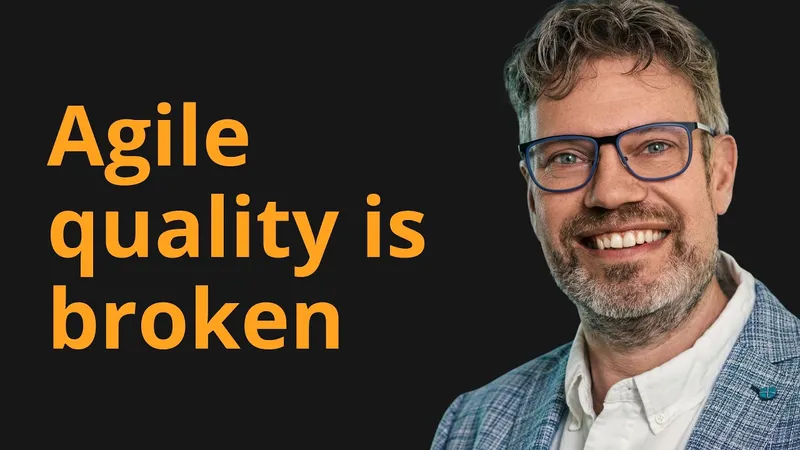
Built-in quality often breaks not in the team but one layer above, in management. How small practices, not frameworks, keep quality from slipping.
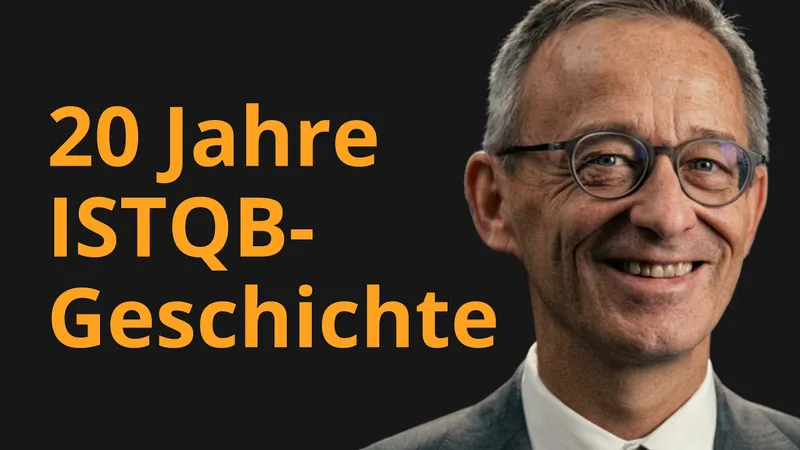
The Swiss Testing Board grew from an SAQ working group and brought measurable learning objectives based on Bloom's taxonomy into the ISTQB syllabi.

Most testers know test case design techniques but rarely use them. Four groups, five techniques, and the right selection logic change that.
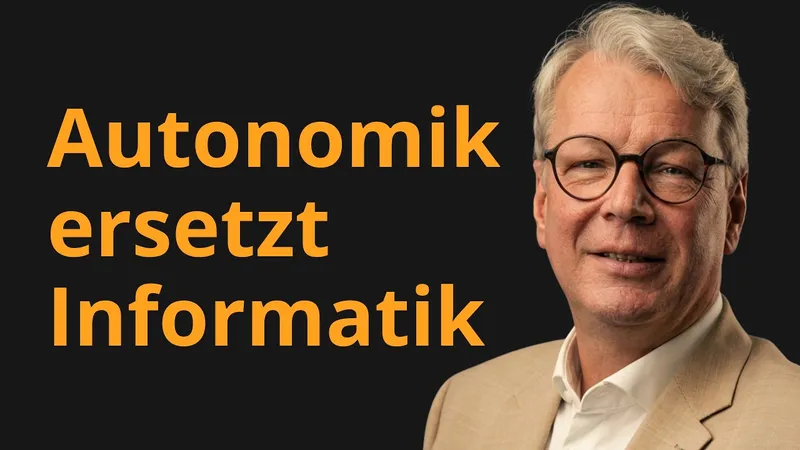
Autonomics is a new discipline for autonomous systems, drawing on control engineering, computer science and sensors. Their safety must hold at runtime.
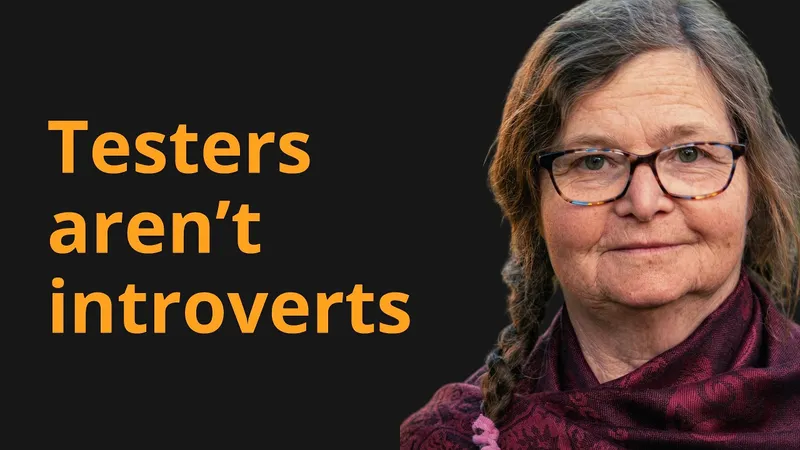
Only 6% of testers fit the classic IT stereotype. Arts graduates, boat builders, urban planners: the data on who actually does testing reframes how we recruit.
Over 25 years of software testing, the tester swung from separate specialist to quality coach in the team. Now AI makes quality everyone's job.

HUSTEF drew 260 submissions for 36 slots in 2025. Why the nonprofit conference in Budapest, held since 2011, sits on a par with EuroSTAR.
Learning with simulations like the Okaloa Flow Lab lets teams and managers feel WIP limits and the pull principle at a board rather than on a slide.
A lightweight test plan does not end up in a drawer. The Federal Office of Administration built one from short modules and released it as open source.
Many podcasts die after three to seven episodes, because the production effort is set too high. Conferences are the best source of guests for new shows.
Enterprise software testing checks how configuration changes in SAP ripple through dependent processes. Why business users test mostly the happy path.
Only 6% of surveyed testers fit the tester stereotype. Many come from boatbuilding, theater or urban planning, and degrees barely predict their roles.
25 to 30 test design techniques exist, yet about ten from four groups cover most cases in practice. How to pick one by problem type, risk and skills.

Code readability depends on working memory, which holds about four chunks at once. Good naming, few arguments and no side effects respect that limit.
Organizational intelligence shows in how well teams learn together. Retrospectives are the biggest lever, pure efficiency leaves little room to adapt.

Accessibility testing can't be fully automated. Accessible components can still break once combined, and blind testers catch it with screen readers.

Impostor syndrome can't be argued away with logic. Knowing the term, talking openly with peers and contradicting your inner critic help break the cycle.
From tester to QA lead: the human challenges outweigh the technical ones. Leading a small project first shows whether a management role suits you.
The testing profession has become a team task, since quality belongs to everyone in an agile team. Experience counts for more than knowledge alone.
Testing in German-speaking countries has been surveyed every few years since 2011. Agile projects now dominate, while classic techniques lose ground.

Software testing trends like AI, test data and accessibility: what testers should watch, and why a new tool rarely fixes the real problem.

The A4Q Practical Tester certifies hands-on skills such as test plans and defect reports. AI generates the exam questions, a human makes the final call.
ISTQB in practice at a telecom vendor: exploratory testing of undocumented third-party systems, homemade load test robots and a shared test vocabulary.
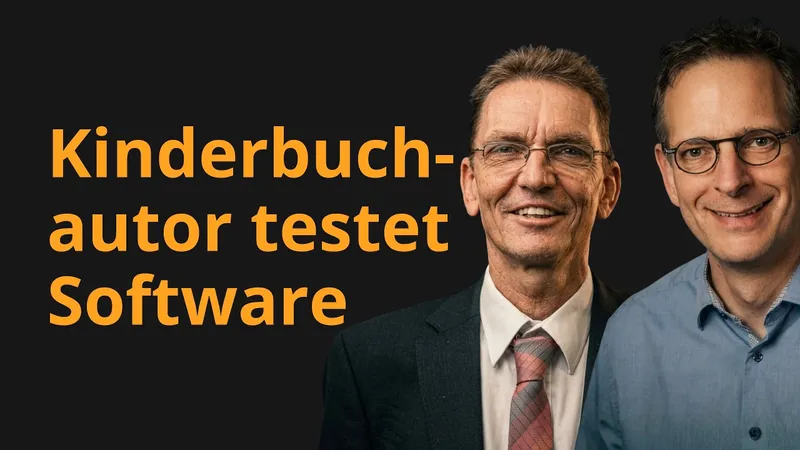
Since 2011, the German Testing Day has been shaped by a board of end users with no vendor interests: practical talks, open formats, unusual keynotes.
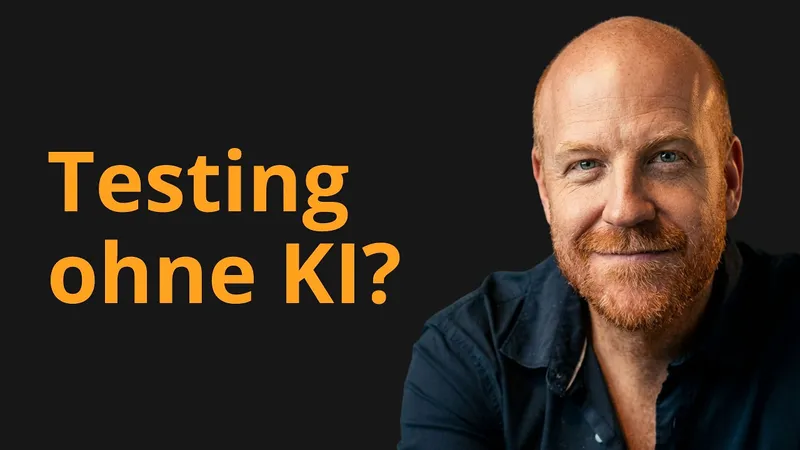
One year, 67 episodes, over 22,000 downloads: What became of a spontaneous video idea and where the journey will take us next.

The test organization of the future replaces hierarchies with cell teams, and testers need V-shape skills with deep knowledge in several areas.
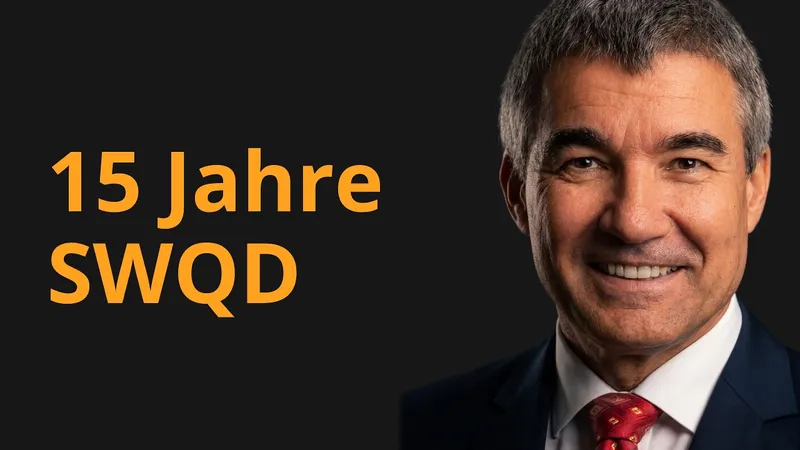
15 years, a scientific track with Springer publication and speed dating: what sets Software Quality Days apart from other testing conferences.
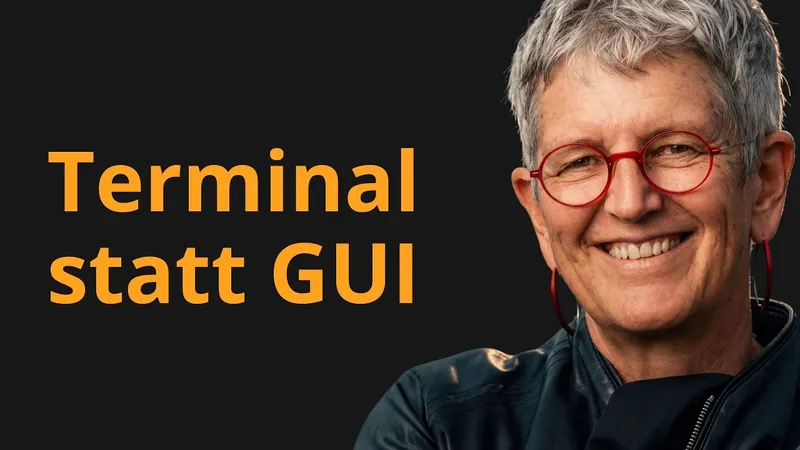
Quality assurance can't be one compulsory lecture. Measurement, resource limits and sustainability belong in every semester of a degree.
Software testing paid by test cases, coverage and errors found: how Europe's first independent test lab worked in 1978 and which principles still hold.
ISTQB CTFL 4.0 unites classic and agile testing in one syllabus and treats test management as a team role. Existing certificates remain valid for good.
Systematic testing picks risky and everyday inputs, and exit criteria show when you have tested enough. Complete testing is mathematically impossible.
Software testers and AI: routine checks move to AI, while judging requirements coverage stays a human task. A carpenter explains his path into testing.

Mental health at work starts with talking openly. Once one person breaks the silence, colleagues open up, and a bad day no longer gets misread.
The ISTQB runs almost entirely on volunteers across 68 member boards. Its president wants every syllabus, CTFL 4.0 included, revised within five years.
AI test automation turns 200 failed tests into seven real causes. Machine learning groups failures by root cause and frees testers to write new tests.