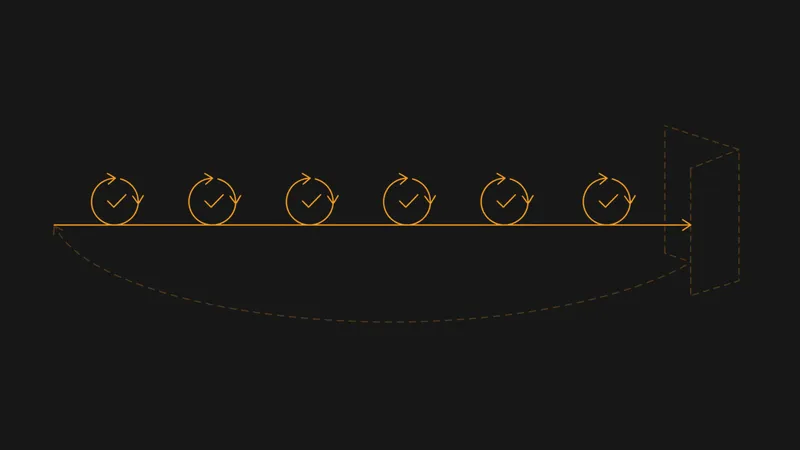
Many Small Loops: Feedback That Hardens Agent Output
Agentic QA holds up through many small feedback loops in the process instead of one big test gate at the end. Three ideas for where a team can start.
Artificial intelligence changes software quality in two directions: teams need to evaluate AI-based systems with probabilistic outcomes, while generative AI can also support analysis, test design, and automation. This topic separates these perspectives and connects technical opportunities with realistic quality risks.
The articles and podcast episodes cover areas such as testing large language models, data and model quality, suitable evaluation approaches, and the responsible use of AI in testing. They explore where AI provides productive support, where human judgement remains essential, and how experiments can become traceable quality practices.
Agentic QA holds up through many small feedback loops in the process instead of one big test gate at the end. Three ideas for where a team can start.
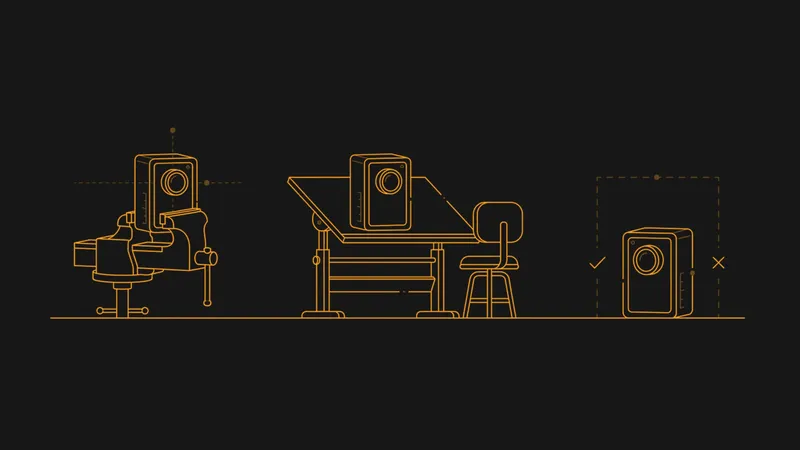
AI in testing writes tests, explores apps and generates test data. It also becomes a test object itself, from chatbots to RAG search.
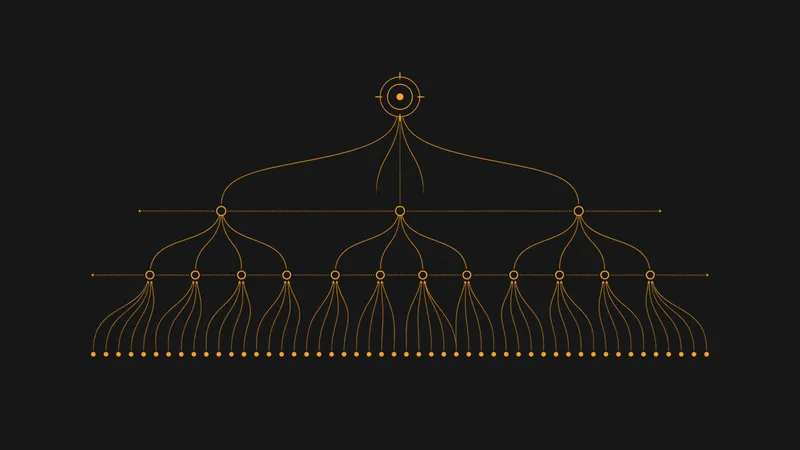
Using AI for our old tasks just gives us faster horses. As the next abstraction layer, AI rewards precise intent and teams that talk to each other.
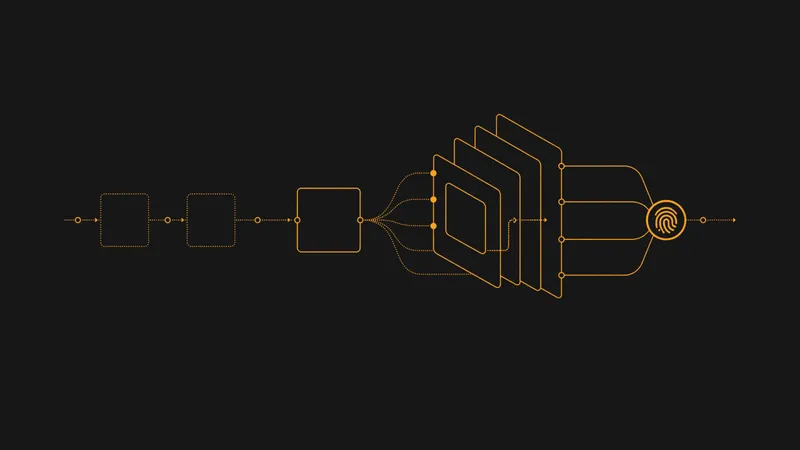
Simply accepting AI output creates no bond with the result. Ownership of code, architecture and tests grows from working through them yourself.

Kamchatka 2008 with books instead of a ChatGPT itinerary: what the double compression of time and work does to us, and why deliberate brakes help.

AI generates movies and apps while teams drown in legacy code. Why we should use AI for the problems that actually hurt, not for demos.

Caught in the AI hype cycle? Total refusal rarely works. Small steps and Gartner's model help you stay calm and alert amid the constant AI noise.

AI delivers results fast, and the learning process passes us by. Testers grow through questions, debugging and system knowledge, not generated tests.
The future of testing lies not in better tools but in humanity. Why testers are the interpreters between AI, code, and the people behind it.

Should AI programming languages stay readable for humans? If AI writes the code, compilers and syntax may change. What that leaves for developers.
Stoicism helps with decision making in the AI era: machines do more of the work, we decide more often. Control, virtue and acceptance bring clarity.
Focus on people: when AI writes much of the code, decisions on quality, ethics and vision land with humans. Companies should invest in them as in tools.
Test data problems won't vanish with AI. First ask which data you really need, delete the rest and build a data architecture that works across systems.

AI in software testing helps with test cases, test data and error analysis. Testing AI systems means rethinking quality criteria such as data quality.

AI for testers helps with analysis, test cases, bug hunting and test data. Weak testers may lose out, good ones build AI into the way they work.

SDETs, coaching roles and quality engineers in place of test managers: in a truly agile setup, quality becomes a shared responsibility of the team.
T-shaped testers who span requirements, architecture, development and DevOps: that is software testing of the future. ML systems need new approaches.

AI evaluation metrics like precision, recall, and the F1 score judge a model across many test cases. Evaluating AI also covers its training data.

AI coding agents need fewer manual reviews once you work on the system itself: rules, hooks and retro skills make their corrections stick for good.
Agentic systems are not just agents working alone. Between 8 and 12 agents can cover testing end to end, but humans still judge what AI cannot.
More AI-generated code means more defects, and only about 30% of AI review comments help. Static analysis, test selection and reviews must scale too.

AI in software testing leaves a faulty fraction: hallucinated requirements, invented test cases. Business knowledge keeps expert testers in demand.

LLM testing can be automated if you accept non-determinism: rubrics and acceptance ranges replace yes/no asserts, and a calibrated LLM judges outputs.

API testing depends on the protocol: REST, GraphQL, webhooks or MCP. It runs more stably than browser testing, and agent-friendly APIs save tokens.
LLMs in software testing pay off where language is the raw material: keyword docs, rule-based reviews, defect messages. Reasoning models review better.

Vibe coding risks grow where system understanding is missing. The future belongs to Pi-shaped developers who combine breadth with real depth.

Documentation testing with AI personas: a simulated junior developer burned 1.8 million tokens where a senior needed 300,000, exposing gaps in the docs.
Learning and unlearning with AI: students who leaned on ChatGPT retained less. Which skills AI cannot replace and which work habits to let go of.

Heavy AI use erodes trust in teams: colleagues seem infallible, and friction and social learning fade. Strong teams onboard AI like a new team member.
Software tester skills start with communication: a bug nobody understands stays unfixed. Critical thinking counts when AI confirms wrong assumptions.

AI in regulated industries starts with strategy: a medical lab mapped stakeholders, narrowed the scope and put compliance on one page with a bow tie.

Generative AI cannot be used ethically as long as training data is used without consent and billionaires control the models.
Chatbot testing has to look past the final answer into chunks, embeddings, prompts and fallback logic. How traceability makes these hidden bugs fixable.
AI-assisted testing turns a month of test case and test data work into about a week, and plain-language automation widens who can build tests.

Agentic engineering is less about prompts than about the agent environment: your prompt is about 20 of 20,000 tokens. Cleanup agents keep quality up.

AI security testing covers the whole life cycle, from training data to live queries. Why output filters often beat input filters, and what OWASP offers.

AI agents earn trust through checks, guardrails and clear requirements. Testing them tracks trends and mean time between failures, not single runs.

Quality Function Deployment (QFD) links customer benefits to functions and tests, the cause-and-effect analysis LLMs can't do. The result: fewer tests.

AI-generated test cases for medical devices: a RAG system retrieves in-house documents, a human reviews the results, so no tool validation is needed.
Next-gen software engineering pairs every model with a test model. AI code looks cheap, but someone still has to version, document and test it.
Critical thinking in AI-assisted testing means asking where an output comes from. If AI writes code and tests, a tester still has to judge the result.

An AI test assistant generates ISO 29119 test cases for business teams without testing know-how. Munich's Sherlock exports them to TestLink or Xray.

AI in software testing is not making testers redundant. The job shifts toward test strategy, critical questioning and early work in refinements.
Testing in 2025 got faster with AI for test cases, scripts and test data, and accessibility became a legal duty. Next up: orchestrating AI agents.

Software quality depends on a solid test process. AI doesn't fix weak processes, it exposes them faster. Testers also need gut feeling.

Testing legacy apps without element IDs works with visual AI selectors. Deutsche Bahn cut mobile checkout regression from two weeks to three hours.

AI bias spreads because people adopt it from algorithms even faster than from humans and rarely notice. Comparative data keeps AI decisions in check.

AI requirements engineering only delivers testable requirements with precise prompts: scope, context, requirement level and templates, refined in steps.

Natural intelligence finds bugs no AI would look for, through curiosity, intuition and context. AI unit tests often hit just one equivalence partition.

For software testing, AI pays off in test data and document analysis. In grown systems, testers' system and domain knowledge still catch side effects.
The 2024 software testing survey of more than 800 respondents: a third use AI for coding and QA, yet only about 40 percent apply basic test techniques.
AI code remediation fixes about two thirds of static analysis findings well. The rest is faulty, and models almost never admit they don't know.
AI code generation pushed up code churn and duplicates on GitHub by early 2024. Testing, precise questions and fundamentals set developers apart.
AI agents in software testing need what a new hire gets: a selection process, a probation period, and ongoing performance checks, not fixed outputs.

Legacy modernization usually stalls on missing subject matter experts. How RAG makes legacy code queryable and why working in slices lowers the risk.
An AI audit needs a yardstick. The TÜV AI Lab's AI Assessment Matrix maps test dimensions against the lifecycle, so assessors pick the relevant fields.

Requirements analysis with DEFOSPAM: seven question areas expose unclear definitions, ambiguity and missing parts. AI adds ideas, people judge them.

An AI test description makes AI systems testable: five capabilities and quality criteria like correctness and bias turn standards into concrete tests.

AI-supported test design delivers equivalence partitions and boundary values in minutes, about 80 percent correct. Catching errors takes method skills.
Software testing trends 2024: AI became standard in test tools, while the Accessibility Act, Cyber Resilience Act and EU AI Act pulled testing earlier.

Trends in software testing: AI is used most in programming and testing, far less in requirements engineering. Scrum dominates, even in aviation.

Generative AI in testing speeds up automation with boilerplate code, test case reviews and edge cases. Unit tests generated from code cement its bugs.

Accessibility testing runs on a jumble of Word, Excel and browser tabs. AI checks linguistic WCAG criteria, and clustering picks representative pages.

Testing AI systems often boils down to one question: does the system behave deterministically? The answer decides whether classic methods suffice.

Software testing trends like AI, test data and accessibility: what testers should watch, and why a new tool rarely fixes the real problem.

Future of software development: AI mainly helps developers create legacy code faster. What that means for quality and jobs over the next ten years.

The A4Q Practical Tester certifies hands-on skills such as test plans and defect reports. AI generates the exam questions, a human makes the final call.
With ATDD for LLMs, each new requirement becomes a dialog-based test. After fine-tuning, the suite shows whether the model learned without regressions.
One year, 67 episodes, over 22,000 downloads: What became of a spontaneous video idea and where the journey will take us next.

Using ChatGPT for test cases, test data and exploratory ideas: What really works, where caution is advised and why prompting matters.

AI quality assurance lacks a clear test oracle, so quality is measured statistically. Metamorphic and pairwise testing help, reproducibility stays hard.

Fair AI sounds good, but what does it mean in measurable terms? Fairness measures contradict each other, so an assurance case breaks the claim down.

Speech recognition testing means testing a black box: every fix costs days of retraining. Golden test sets and generated variations find errors early.
Prompt engineering for test cases gets better results with few-shot examples and embedded specs. Still, two of eleven generated tests remained wrong.

Software testers and AI: routine checks move to AI, while judging requirements coverage stays a human task. A carpenter explains his path into testing.
AI test automation turns 200 failed tests into seven real causes. Machine learning groups failures by root cause and frees testers to write new tests.