
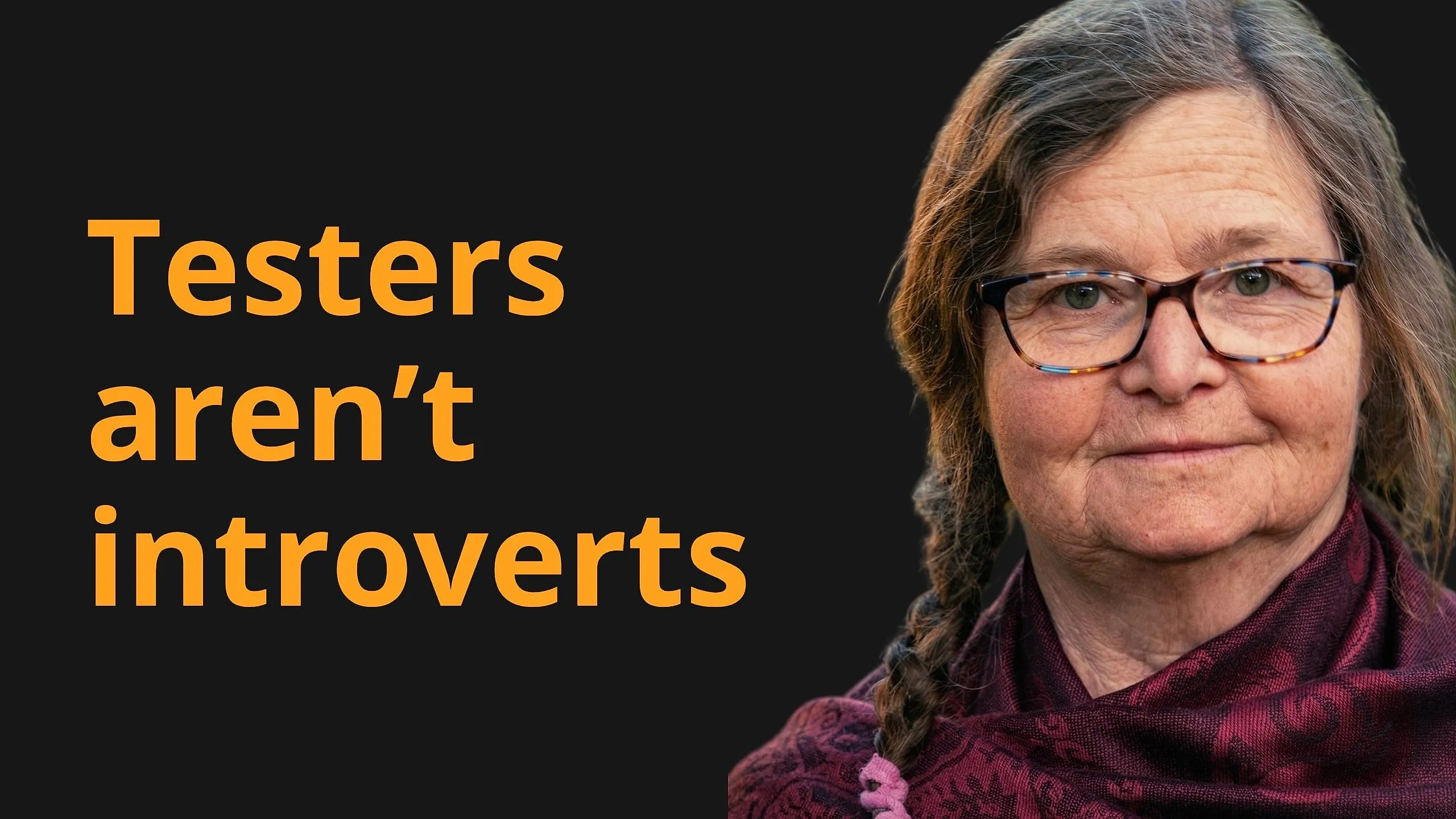
Stereotypes about IT workers describe a narrow personality type: someone socially passive, focused on a single interest, and disengaged from the arts. Survey data from testers shows only six percent matched that profile. Testers came from backgrounds including boat building, theater, urban planning, and international relations, and a large share held active arts hobbies such as composing music or performing.
Key Takeaways
- Only 6% of testers in Isabel Evans’s survey sample matched the IT stereotype from recruitment databases, meaning the overwhelming majority of practicing testers do not fit the narrow profile those databases promote.
- Recruitment and careers advice databases actively narrow the field by directing only stereotypically “nerdy, non-social, arts-averse” candidates toward IT, which filters out the diverse people who already make up the profession.
- Arts graduates in the survey sample were doing test automation and technical testing roles at a rate of around 40%, and IT graduates were equally likely to be in non-technical roles, so degree subject does not predict role or aptitude.
- The biggest quality problem testers reported with their tools was not aesthetics but operability: tools with attractive interfaces often failed to support actual testing workflows, creating what Isabel Evans calls the illusion of usability.
- Isabel Evans distilled her research findings into 12 heuristics, framed as open questions, designed to help tool designers and evaluators think through who a tool is for and how it supports real testing work.



The IT stereotype shapes who even applies
Recruitment and careers advice databases carry a fixed picture of who belongs in IT, and that picture is narrow. The classic profile describes someone with little social activity, no real interest in the arts, limited communication, and often a single hobby they fixate on. The message such databases send is direct: if you are this kind of person, IT is for you.
That filter does damage before anyone is ever hired. Research by McChesney in Britain compared people working in IT, people aspiring to IT, and the stereotype embedded in those databases. Only a minority of actual IT workers matched the stereotype, somewhere around a quarter to a third of the sample. The people aspiring to enter IT sat closer to the stereotype than the people already doing the work.
The recruitment process narrows the funnel. It encourages a particular type of person to feel they have a right to be there, while signaling to everyone else that they do not fit.
Testers come from far more places than the job title suggests
The people doing testing are drawn from a wide spread of backgrounds, far wider than the “tester” label implies. Isabel Evans ran an industry survey through online networks and conferences, gathering open-ended answers about how people test, the tools they use, and who they are outside work.
The backgrounds that surfaced included boat building, theatre studies, international relations, urban planning, and the arts. People arrived with arts degrees, science degrees, social science degrees, IT degrees, and no degree at all. They had held a wide range of jobs before testing.
When Isabel applied McChesney’s model to her own sample of testers, only six percent matched the IT stereotype. In a group supposedly built around the narrow nerd profile, almost no one fit it.
Testers are active creators, not passive hobbyists
A large share of testers hold arts-related hobbies, and they engage with them actively rather than passively. The stereotype assumes someone who consumes quietly. The data points the other way.
Take music as one example. Some testers described listening to music, which is passive. A larger group described playing instruments or singing in choirs. Others said they compose music and write songs. That same pattern of active, creative engagement repeated across other interests too.
Many testers also reported multiple hobbies at once. The picture is not a person with one mono-fixed interest, but people with broad and creative lives.
Why a degree does not predict the testing role
The subject someone studied is a poor predictor of the testing work they end up doing. The assumption that arts graduates drift toward test management and design, while technical roles go to IT graduates, does not survive contact with the data.
Around forty percent of the arts graduates in the survey were doing test automation and technical testing. Around forty percent of the IT graduates were not doing technical roles at all. Aptitude, enjoyment, and the actual job all run free of the degree on the certificate.
If you recruit by filtering for a computer science background, you are screening on a signal that does not tell you who will be good at the work.
Communication style tracks background, and you need the spread
Different educational backgrounds bring different ways of communicating about testing, and a strong team needs all of them. When testers described their approaches in the survey, patterns emerged by degree subject.
Arts graduates wrote clear, well-expressed, almost story-like descriptions. They talked about people and the problems they were solving. Social scientists framed things around the whole organization, teams, and how people interacted. Science graduates produced ordered lists, terse but informative, with real structure. People without degrees leaned heavily into storytelling, as if talking you through it over a drink.
IT graduates supplied plenty of technical detail, but it was often poorly structured, hard to get through, and short on narrative.
We need those arts graduates and those social scientists to get us communicating across the organization and telling our story, and we need those scientists to give us that kind of order and structure. (Isabel Evans) The practical reading is plain. Technical skill matters, but someone has to communicate the risks, explain what testing found, and ask what stakeholders need. That work draws on the communication strengths the IT track tends not to build.
Test tools fail testers through a poor lived experience
The way testers experience their tools carries a heavy emotional weight, and much of it is negative. Isabel’s earlier research found frustration and upset around tool use, alongside some good emotions, but the overall emotional response ran high. That makes tool quality a matter of health and welfare at work, not just productivity.
The expected culprit was usability, and usability was involved, but not in the obvious way. The most problematic quality attribute was operability: whether the tool lets a person carry on their workflow and complete the tasks that reach their actual goal.
This finding came from open questions, not leading ones. People were asked to describe an experience with a tool. The quality attributes were drawn out of what they reported, never named for them in advance.
The illusion of usability: pretty interfaces that fail in use
A tool can look usable and still obstruct the work, and that gap is where the most annoyance lives. Some tools were bought because they had attractive interfaces. The surface looked fine. Once people started testing with them, the tool did not support how they actually worked.
Isabel calls this the illusion of usability. Superficial polish reads as usability during evaluation, then collapses once real tasks begin. The lesson for anyone selecting a tool is to test it against your real workflow, not against a demo screen.
Why one framework cannot design the perfect test tool
There is no single framework that produces the ideal test tool, because there are too many variables to resolve. Isabel initially set out to build one: feed in the information, get an answer about how the tool should look. That ambition did not hold.
The redirection came from an academic, Hussein Dugan, who suggested the contribution should be a set of heuristics rather than a framework. Not a tool for writing tools, not a solution to the whole problem, but questions that designers and evaluators consider, grounded in the evidence.
How the 12 heuristics work in practice
The heuristics are 12 questions, not 12 answers, because the right answer depends on context. They ask you to think rather than to follow a checklist. Where each question leads tells you how the tool should be designed or whether it fits.
The order is not fixed. Across industry case studies, people pulled out different questions as important in their context, ran them in a different order, and circled back to revisit a question later in the process. They work as an aid to thinking, flexible by design.
| Aspect | What the heuristics are | What they are not |
|---|---|---|
| Form | 12 questions | A set of fixed answers |
| Use | Aid to thinking, applied with judgment | A linear checklist |
| Order | Chosen and revisited by context | A fixed 1-to-12 sequence |
| Scope | For designing or evaluating a tool | A framework that designs the tool for you |
The plan is to publish them on a repository under a Creative Commons license, after expert reviews and case-study refinement. Anyone designing in-house tools, building on open source, vendors, or teams evaluating tools can pick them up and use them however they want.
How to open recruitment beyond the stereotype
Start by taking the evidence directly to the people who recruit. The stereotype lives in HR processes and careers databases, so that is where the conversation has to happen, and not only for testers. The same narrowing affects developers, UX people, product owners, systems analysts, and architects.
The published research gives you something concrete to carry. You can bring it to your own HR department, your recruiters, and your managers, and use it to open the discussion about who gets encouraged to apply.
A diverse team is also a representative one. If software is built for the whole of humanity, a single narrow group building it makes little sense. Widening who feels they have a right to be in IT is how teams come to reflect the people they build for.
Frequently Asked Questions
How well do IT personality stereotypes match the people actually working in the field?
Poorly. McChesney’s British research compared people working in IT, people aspiring to enter it, and the stereotype embedded in recruitment databases. Only around a quarter to a third of working IT people matched that profile, and the aspirants sat closer to the stereotype than the practitioners did. In Isabel Evans’s tester sample, six percent fit it.
What backgrounds do people working in software testing come from?
Far more varied ones than the job title suggests. Isabel Evans’s industry survey surfaced testers who had come from boat building, theatre studies, international relations, urban planning and the arts. Their education ranged across arts, science, social science and IT degrees, and some had no degree at all. Most had held quite different jobs before testing.
Is a computer science degree a useful filter when recruiting testers?
No. Around forty percent of the arts graduates in the survey were doing test automation and technical testing, and around forty percent of the IT graduates were in non-technical roles. Degree subject predicts neither aptitude nor the work someone ends up doing, so screening on it removes capable candidates without improving the shortlist.
Why does a testing team benefit from people who did not study a technical subject?
Because ways of communicating about testing track educational background, and a team needs the spread. Arts graduates wrote clear, story-like descriptions about people and the problems they solved. Social scientists framed things around organisations and teams. Science graduates produced ordered, terse, informative lists. IT graduates supplied technical detail that was often poorly structured and short on narrative.
Which quality problem causes testers the most trouble with their tools?
Operability, rather than appearance. The decisive question is whether the tool lets a person carry on their workflow and complete the tasks that reach their actual goal. Usability was involved, but not in the obvious way. The finding came from open questions: people described an experience with a tool, and the quality attributes were drawn out afterwards.
What should you check before buying a test tool with an attractive interface?
Test it against your real workflow, not against a demo screen. Some tools were bought because their interfaces looked good, then failed to support how people actually tested once work started. Isabel Evans calls this the illusion of usability: surface polish reads as usability during evaluation and collapses under real tasks.
Why does research into test tool quality end in questions rather than a checklist?
Because too many variables exist for one framework to resolve, and the right answer depends on context. Isabel Evans abandoned her original plan for a framework after the academic Hussein Dugan suggested heuristics instead. The result is 12 questions. In industry case studies, people picked different ones as important, ran them in their own order, and revisited them later.
How can a company widen the range of people who apply for IT roles?
Take the evidence to the people who recruit. The stereotype sits in HR processes and careers advice databases, so that is where the discussion belongs, with recruiters, HR departments and managers. The same narrowing hits developers, UX people, product owners, systems analysts and architects. Software built for everyone is a poor fit for one narrow group of builders.