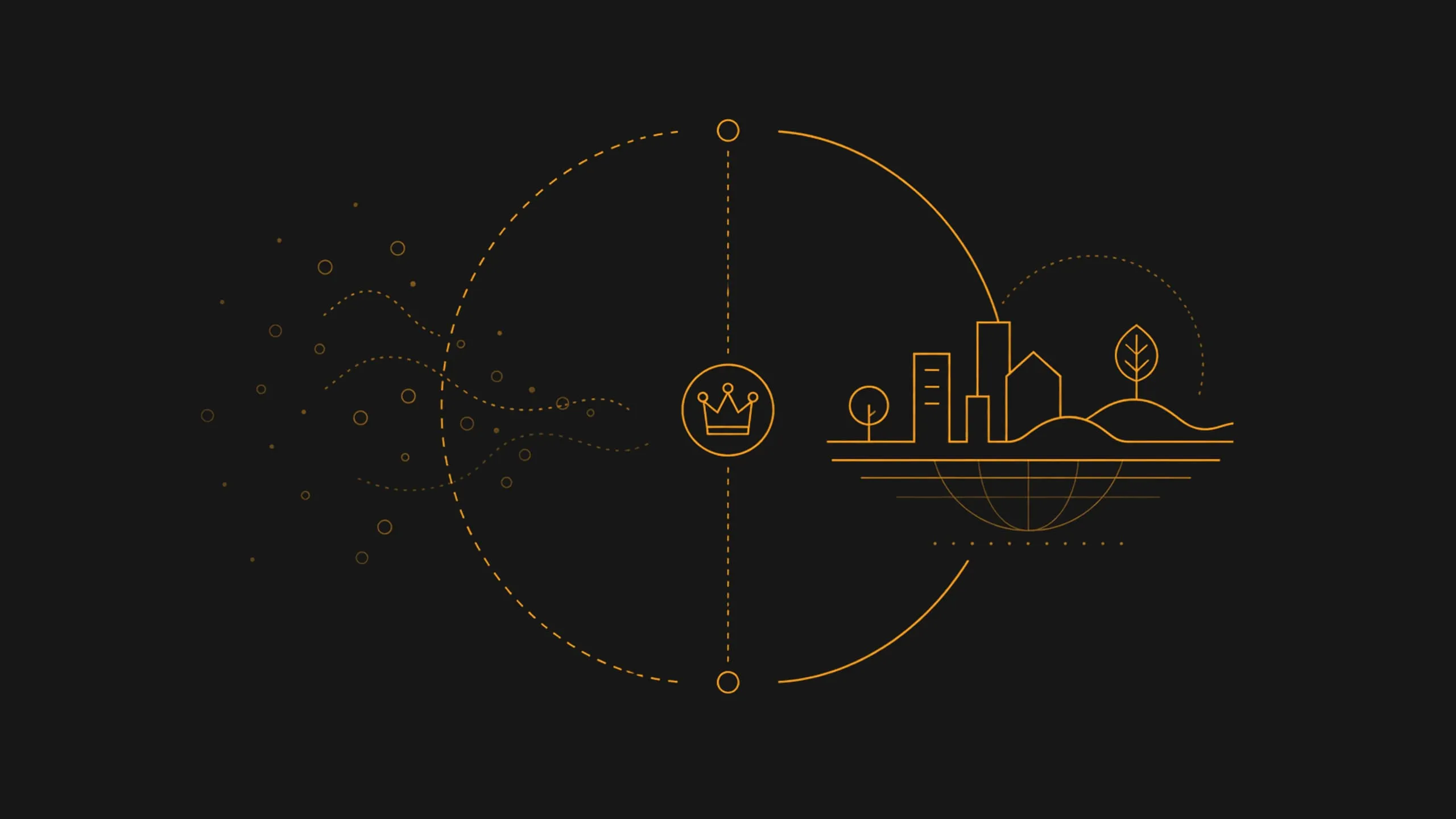
We are standing at a historic fork in the road: who is going to be the boss from now on? Technology or us? As I see it, there are two options.
- We use technology as a tool to solve our social, ecological, and everyday challenges.
- We lull ourselves deeper and deeper into filter bubbles optimized by algorithms, let them shape our worldview and our behavior, and end up, data and all, as someone’s profit through surveillance.
A Day in Option 2
In my keynote “Future Mindset,” I recently sketched out a day in option 2:
“The smart implant in the back of your right hand wakes you at the perfect moment for your sleep cycle. Smartphones don’t exist anymore. Neither does the snooze button, unfortunately: the implant makes you get up. You get ready for the day and climb into the back of one of the autonomous vehicles that are everywhere now. The ride is free for you, but in return the seat instantly records your biometric data. Based on that data, you see ads tailored to you for the whole trip. You don’t even have to order anything. The system reads your buying impulse from your reactions and orders for you, same-day delivery included.
You ride on to the beach promenade and meet an old friend you haven’t seen in ages. The two of you stroll along the promenade and talk about the good old days. Once again you notice how spotless the paths are. Not a scrap of litter anywhere. No graffiti, no dog poop. No wonder, really: the entire public space is under video surveillance, and any misconduct is punished immediately and automatically. You say goodbye to your friend and wander over to the office.
Your smart implant notices that your energy level isn’t high enough yet to perform well at work today and switches on a power playlist with energetic beats. When you reach your desk, the time-tracking bot starts measuring your time and automatically deducts breaks and distractions. Then, suddenly, you get a strange feeling. You feel completely at the mercy of all these things, you can barely make a decision of your own anymore, and it bothers you that you have no privacy left. Your smart implant picks that up right away, of course, and switches the playlist to your favorite songs, which distracts you and takes your mind off it in no time.
A little later, the implant starts glowing red. Your eyes go wide, because you know what that means: your social score, your standing as a citizen, has just dropped far enough that you’ve slipped down a level. That means no more long-distance travel, a curfew, a restricted bank account, restricted access. While you’re still sweating over what the reason might be, it arrives by messenger: today you carelessly crossed the street on a red light. On top of that, your emotional and physical behavior recorded during your walk (neuroscans, pulse, gestures, facial expressions, walking speed, etc.) puts the probability that you’ll commit a crime within the next six months at 87 percent.”
If that’s the future, I’d rather have option 1. But a lot of what I sketched is already there in outline today. Social scoring, surveillance, priming, advertising algorithms …
The Others Will Take Care of It
Our dilemma: how do we avoid this? Not much is coming from politics. It’s far too busy keeping the system running. And what it does try to regulate has no effect on the bad actors while it hassles everyone else. The GDPR sends its regards. Corporations feel more committed to shareholder value than to people, whether customers or employees. That leaves us. Every single one of us. The self-employed. Small businesses. Parents. Nerds. Consultants. Supervisors. Employees. Human beings. Each of us at home, in our own circles, among our colleagues. Step by step toward a positive future. Because change starts small: with us!