Do you remember my thoughts on “wanting to want”? It was about establishing an attitude and a context for new things - agility, for example. And that it takes time and patience to develop this culture. Afterwards, the question kept coming up as to why some people manage change so well - and others find it so difficult.
To make it concrete, let’s imagine three companies. The boss comes euphorically from the conference and says: “DevOps solves all our problems. Put that into practice.” The teams from the three companies agree and get started. Team A sets off, tries things out and produces its first results after a week. Team B gets stuck in, works its way through, has repeated setbacks. But after six months, DevOps is established here too. Team C abandons the project after a year of meetings, wrangling over responsibilities and frustration. Sapperlot, how could that happen? Of course, there is no single cause - and please don’t believe anyone who says otherwise. Not even me!
Today I would like to add another perspective - a biological-philosophical one. Which is also a little bit right, like the others.
The brain
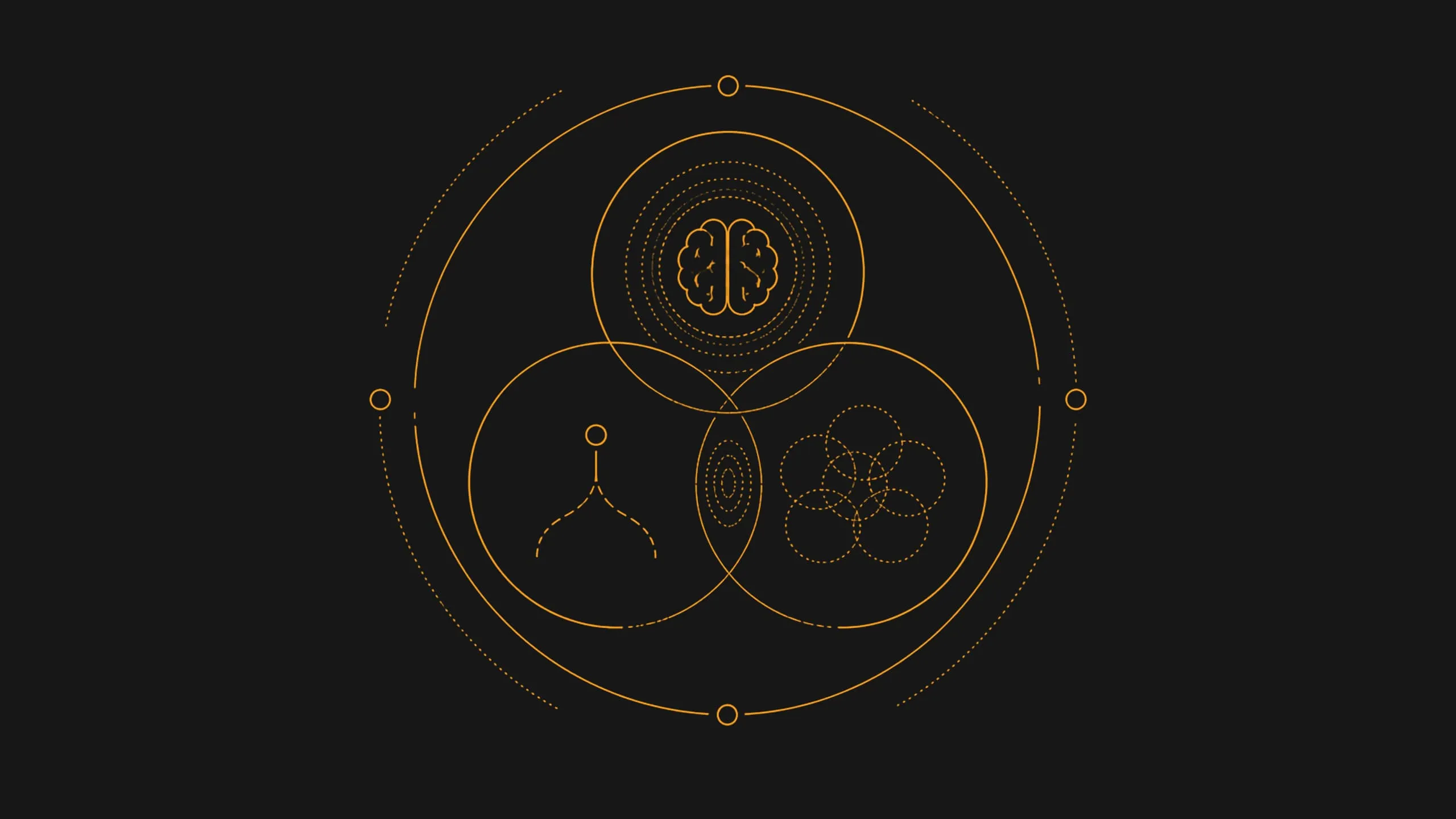
Let’s build a model of our data processing: A stream of data with an unbelievable amount of sensory impressions is constantly streaming at us - images, sounds, smells and so on. But our conscious mind has nowhere near the capacity to process all this (try decoding a 4k movie on a 386 - it won’t work).
It’s a good thing that we have a filter that works unconsciously. It checks every bit and byte incredibly quickly:
- Is this something new or something familiar?
- Is it important or unimportant?
A lot of things are then discarded or processed automatically. But if the unconscious comes to the conclusion: It’s new, it’s important, but I can’t do anything with it and we have to deal with it, then the task is handed over to the conscious mind. you take care of it. The probing takes about 300ms, so it goes quite quickly.
The unconscious is subjective and very clever - it is constantly learning. Always. Without interruption. In the sandpit, at school, during the first kiss, the first break-up, at work, at home and on vacation - every experience flows into the system and helps determine the next filter rounds.
The almost free will
It is true that in the conscious mind we can decide freely and on a large scale what we do and how we behave. But only within the framework that the unconscious allows through filtering and perception. It tinkers with our very own individual reality throughout our lives - and we can move freely within this reality and consciously control our actions.
Arthur Schopenhauer coined the apt phrase:
“Man can do what he wants, but he cannot want what he wants.” - Arthur Schopenhauer
And so if we “want” to work on our wanting, then this is done via the unconscious - and that means: having experiences, having experiences, having experiences.
If I’ve unconsciously learned all my life that change is great, it’s easy for me to put it into practice. If I see stability as success, it’s all the more difficult.
Group formation
And our three teams? Well, birds of a feather flock together - even unconsciously. We group together with those who tick like us (this also proved its worth in the sabre-tooth era). Perhaps we are united by our vision - or by job security. Curiosity about technology or people. The system finds itself.
In a traditional company where the same thing has been done for decades, a “DevOps from now on” will not bring forth frenetic choirs. Even if you want to do it together. Companies that have always placed great emphasis on self-organization also attract self-organized people. The framework for deciding what to do is similar and DevOps or agility is implemented more quickly.
So simply wanting to do something is not enough to bring about change. We are where we are today as the sum of our past experiences. Each of us individually and together as a team or company.
Frequently Asked Questions
Why does one team succeed in transitioning to DevOps in a matter of weeks, while another fails completely?
There is no single cause. The article compares three teams with identical assignments: one showed initial results after a week, one took half a year despite setbacks, and the third gave up after a year full of meetings, squabbles over responsibility, and frustration. The difference lies in the experiences that the people and the organization had accumulated beforehand.
Why does a change fail even though everyone involved actually supports it?
Conscious consent isn’t enough. Conscious decision-making operates only within the framework permitted by the unconscious mind through its filters. Anyone who has spent decades learning that stability equals success will struggle with implementation, even with the best of intentions. Change cannot be achieved by simply wanting to act.
How does the brain decide which impressions even make it into conscious thought?
An unconscious filter evaluates every impression based on two questions: new or familiar, important or unimportant. Much is discarded or processed automatically. Only what is new and important—and cannot be automatically categorized—is passed on to the conscious mind. This evaluation takes about 300 milliseconds.
What does Schopenhauer’s statement about volition mean for plans to change?
“A person can indeed do what he wants, but he cannot want what he wants.” Willing itself, therefore, is not freely chosen; it arises in the unconscious. For change initiatives, this implies that behavior can be directed, but the underlying will can only be influenced through experience. And that takes time and patience.
Can a new mindset be established in a company through an announcement from the top?
No. The unconscious learns from experience, not from instructions, and it does so continuously: in the sandbox, in school, at work, and at home. A statement like “DevOps solves all our problems—implement it,” brought back euphorically from a conference, does not change the filters through which those involved perceive the new way of working.
Why do people in a company often think and act in strikingly similar ways?
Birds of a feather flock together, even unconsciously. People gravitate toward those who function similarly, connected perhaps by a shared vision, job security, or a curiosity about technology. Companies that have always prioritized self-organization attract self-organized people. The decision-making framework is similar there, and new ideas are implemented more quickly.