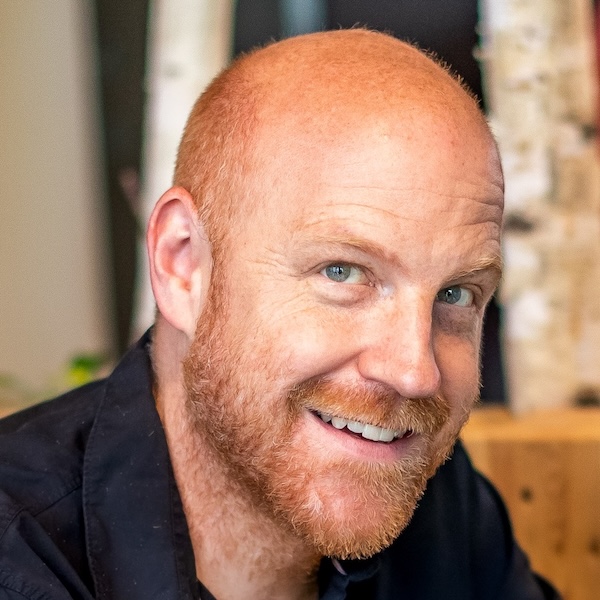

Florian Fieber is the founder and managing director of QualityDojo IT-Consulting GmbH in Berlin and has been working as a consultant and trainer in the field of quality assurance for software systems for almost 20 years. He specializes in test management, the improvement of test processes and the business analysis of enterprise applications. In line with the company vision “Satisfied users through better software”, he supports his customers with strategic consulting and operational project support as well as with the qualification of employees and teams. He is also a volunteer in the German Testing Board e.V. for the further development of the “ISTQB Certified Tester” scheme and is currently Chairman of the GTB.
What challenges will software testing have to face in the future?
When I look into the future of our profession, I first look back at our past and my personal experiences and try to draw conclusions for the future. I therefore assume that our (technological) world will change ever more rapidly and disruptively and that we will be confronted with significant new challenges in ever shorter periods of time.
I don’t know what will happen specifically. But I do know that things will continue to develop and change. For example, we now have a certain “common sense” about how projects should be organized. Twenty years ago, this looked quite different and will probably be just as different in twenty years’ time. The same applies to the buzzwords you mentioned, such as AI, AR and blockchain. For us as software testers, these are all boundary conditions that we cannot influence directly, but which we must be able to deal with. However, we can influence the way we work as software testers ourselves.
What ideas or solutions could address these challenges?
I therefore see two major challenges that we have to face as software testers: Firstly, I have to keep pace with the technological changes I have just described. I have to continuously expand my theoretical and practical knowledge and seriously engage with the topics on the horizon at an early stage. This is the part that we typically classify as “lifelong learning” and which is not so specific to software testing at first.
Secondly - and I think this is the more important aspect from a software tester’s point of view - I should master my craft in such a way that it is robust for the future, that it not only works today, but will probably also work in the future. The basic principles, methods and mindsets of a software tester are ideally independent of specific domains, systems, procedures or tools and, in particular, have a much longer shelf life.
So I don’t know what the “common sense” will be in the organization of projects in twenty years and what specific technological disruption we will be dealing with then - but I try to master the basic principles of the software tester’s craft today in such a way that it will probably still be valid in twenty years and I “only” have to adapt it to the boundary conditions that will then apply.
For example, it’s nice if I know how to use a specific test management tool today, but it won’t help me in the future if I don’t understand the underlying test management methods. It’s good today if I can operate a specific test automation platform, but it won’t help me in the future if I don’t understand the basic principles of test automation. Conversely, however, I am equipped for the test management tools and test automation platforms of the future if I have already mastered the underlying principles and methods today.
What does future testing look like? How will we test?
As described, we do not have to completely reinvent the testing of the future. Nevertheless, there is no “one” testing, just as there is no “today testing”, there will be no “future testing”. Testing will continue to evolve and certain trends and focal points will certainly play an even greater role in the future.
Testing already has a high level of acceptance today, and I think that this will continue to grow and that testing will become even better integrated with other development activities and become more and more established, especially in the early phases of software development. In addition, the focus will continue to be on testing quality requirements and non-functional aspects, particularly in the areas of IT security, usability and interoperability. And last but not least, we have experienced and learned about major changes in the possibilities of virtual and distributed collaboration over the past two years. The pendulum will certainly not swing back from 100% remote to 100% on-site. However, we have seen that remote can work and therefore need to focus even more on the technical and social challenges of distributed testing in order to create and maintain the right framework conditions.
How can testers and test managers prepare for this today?
In addition to lifelong learning, having the right mindset and mastering the right principles and methods, it might help us in the community if we sometimes focused less on roles and more on tasks. For example, in my view it is pointless and energy-sapping to deal with the question of whether “you still need a test manager these days”. We should move away from the question of the correct role designation and focus on which tasks are important and how we can map these tasks in the best possible and sustainable way in our specific project context. In the future, there will still be classic organizational forms in which projects are organized hierarchically and “you need a test manager” - whether you personally think this is good or bad is irrelevant. At the same time, there will also be holocratic forms of organization that will function completely differently. In both forms, however, we need to adequately map software testing and it would help each side to take a less dogmatic view of their own day-to-day work.
Frequently Asked Questions
Why is it so difficult to prepare software testing for specific future technologies?
Because no one knows what disruption is coming next. The only certainty is that the technological world will continue to change—and at ever-shorter intervals. For software testers, these changes are boundary conditions that don’t directly influence them, but which they must deal with. What can be influenced, however, is the way testers themselves work. That’s exactly where the effort is worth it.
How should testers approach trending topics like AI, augmented reality, or blockchain?
As contextual factors, not as a separate field of expertise that can be predicted. Such topics change the context of testing, not its fundamentals. It is more important to engage seriously and early with topics emerging on the horizon and to continuously expand one’s theoretical and practical knowledge. This corresponds to what is commonly referred to as lifelong learning and is not specific to testing.
Is it worth learning a specific test management or test automation tool above all else?
Only to a limited extent. Mastering a tool is nice, but it’s of no help if you lack the underlying test management methods or the principles of test automation. Conversely, those who master principles and methods are also prepared for future tools and platforms. Tool knowledge becomes outdated; the methodological foundation lasts longer.
What makes test knowledge enduring?
The fundamental principles, methods, and ways of thinking inherent to the craft are enduring, provided they are formulated independently of specific domains, systems, procedures, and tools. This foundation has a significantly longer shelf life than knowledge of specific tools. It then only needs to be adapted to the current constraints, rather than having to be relearned with every technological change.
Which testing priorities are gaining importance?
The focus is shifting toward quality requirements and non-functional aspects, particularly security, usability, and interoperability. This was the assessment provided in the 2022 article. In addition, there is a closer integration of testing with other development activities and its further establishment in the early phases of software development. Testing does not need to be reinvented for this.
Are test managers even necessary in modern organizational structures?
The question of the job title is misleading and a waste of energy. It makes more sense to clarify which tasks are important and how they can be sustainably addressed within the specific project context. There will continue to be hierarchically organized projects that require a test manager, alongside holacratic structures that function differently. Both must adequately address testing.
Does distributed remote testing work?
Yes, experiences with virtual collaboration since 2020 have shown that remote work can be effective. A swing back from 100 percent remote to 100 percent on-site was not expected even by 2022. This makes it all the more important to address the technical and social challenges of distributed testing so that the appropriate framework conditions can be established and maintained.