 Richard Seidl
1 min read
System testing
The system test is a very exciting test stage. Unit testing and integration testing focus more on the internal aspects of the application. The system...
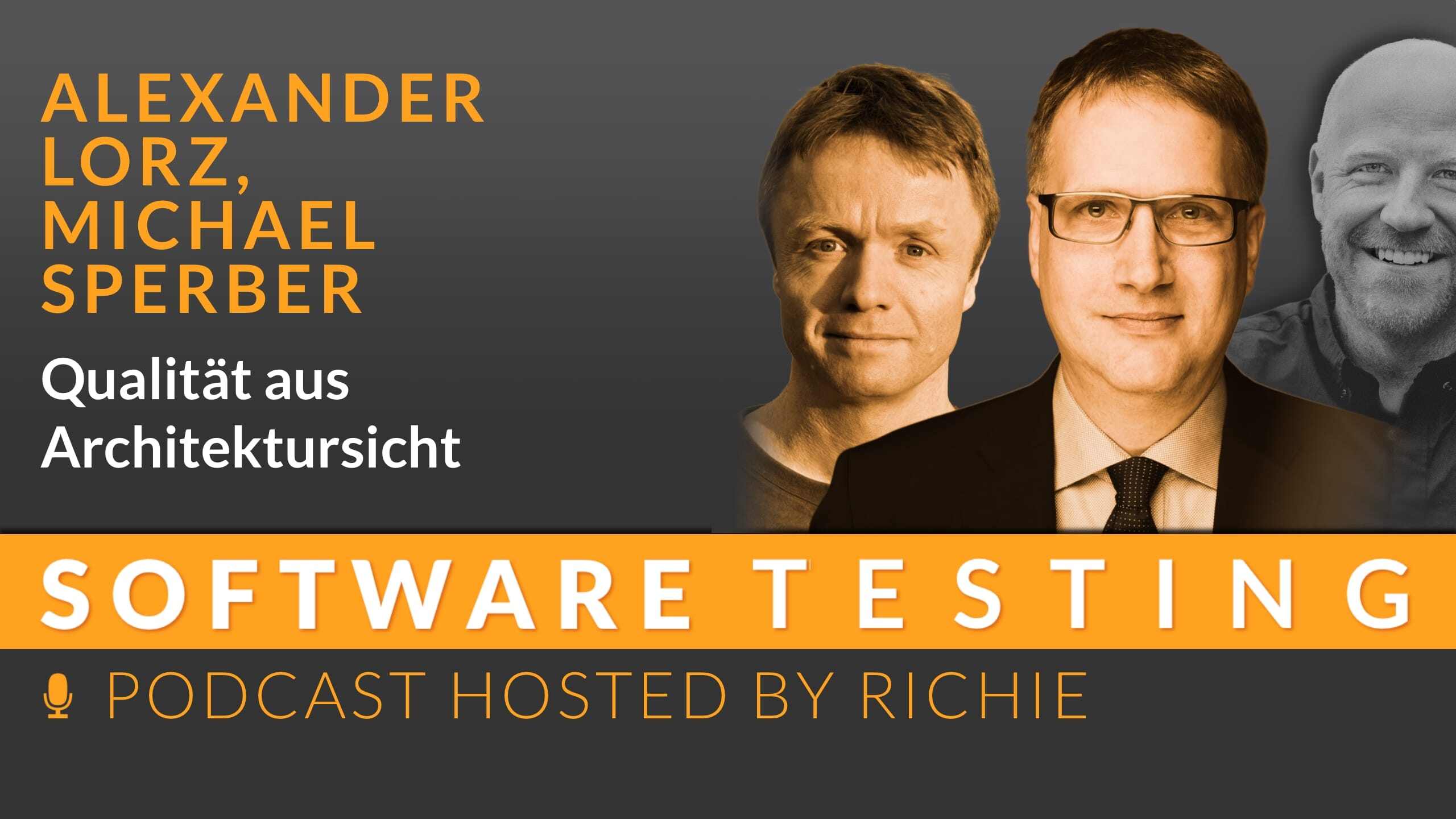
Are quality requirements the same as non-functional requirements? And what are functional requirements? What is included in the ISO 25010 quality model? And how do you determine if the requirements are met? In this episode, Mike and Alex discuss the concept of quality from a software architecture perspective.
"For some of my training participants, maintainability and changeability don't play a role at all, they come from a safety environment, they only want to deploy the thing once and then it should run safely and never be changed again for the next 10 years." - Alexander Lorz, Michael Sperber
Dr.-Ing. Alexander Lorz, a freelance software architecture trainer and IT consultant, contributes to the development of the iSAQB Foundation curriculum and creates training materials. With experience in research and industry, he has specialized in practice-oriented software architecture training for various industries since 2016. His goal is to empower teams to deliver high-quality software.
Dr. Michael Sperber is Managing Director of Active Group GmbH. He is an internationally recognized expert in functional programming and has written numerous articles and books on the subject. Michael Sperber is co-founder of the blog



In this episode, my guests Alexander Lorz and Michael Sperber discuss the complex aspects of quality in architecture, the challenges of defining and measuring quality requirements and the importance of adaptability in software architectures.
In this episode, Alexander Lorz and Michael Sperber, experienced ISAQB trainers for software architecture, are my guests. Together we dive into the topic: What exactly does quality mean from the perspective of architecture? The exchange promises to shed light on the often elusive concepts of functional and quality requirements.
Defining quality in architecture is proving to be a complex challenge. Our guests share their insights on how difficult it is to tangibly define quality and make it measurable. They shed light on the difference between functional requirements and quality requirements and explain why the latter are often underestimated. This approach means that architects face particular challenges when planning and evaluating projects.
A central point of our discussion is the revision of the ISAQB curriculum, in particular the section on quality. This project reveals the difficulties in dealing with the topic of quality within the training of software architects. It becomes clear that a clear delineation and treatment of quality requirements is essential in order to better prepare future architects for their tasks.
How do you measure quality? This is a question that our guests are very interested in. The discussion shows that the measurability of non-functional requirements such as usability or security is a major challenge. Alexander and Michael share their experiences of dealing with such requirements in projects and how important a conscious approach to them is for the overall quality of a system.
Another important aspect of our debate concerns the adaptability of software architectures. The ability to respond to change - whether through evolving functional requirements or new frameworks - is emphasized as a critical component for long-term successful projects. Michael shares his experience that flexible architectures are often better equipped to maintain quality standards over time.
We conclude our discussion with a look at the open development process of the ISAQB curriculum on GitHub. Alexander encourages the community to actively participate in the further development of the curriculum. This call underlines the collaborative effort to continuously improve and adapt teaching around software architecture.
1 min read
The system test is a very exciting test stage. Unit testing and integration testing focus more on the internal aspects of the application. The system...

1 min read
Quality in agile teams needs both breadth and depth. The common slogan that everyone owns quality can hide who takes on hard work. Cross functional...
1 min read
Test levels are a very practical model for structuring test activities. Each of these test levels covers a different part of the software and the...