 Richard Seidl
1 min read
Quality from and with Prompt Engineering
Podcast Episode: Quality from and with Prompt Engineering As a deep learning enigneer, David explores the possibilities of using AI. It's about his...
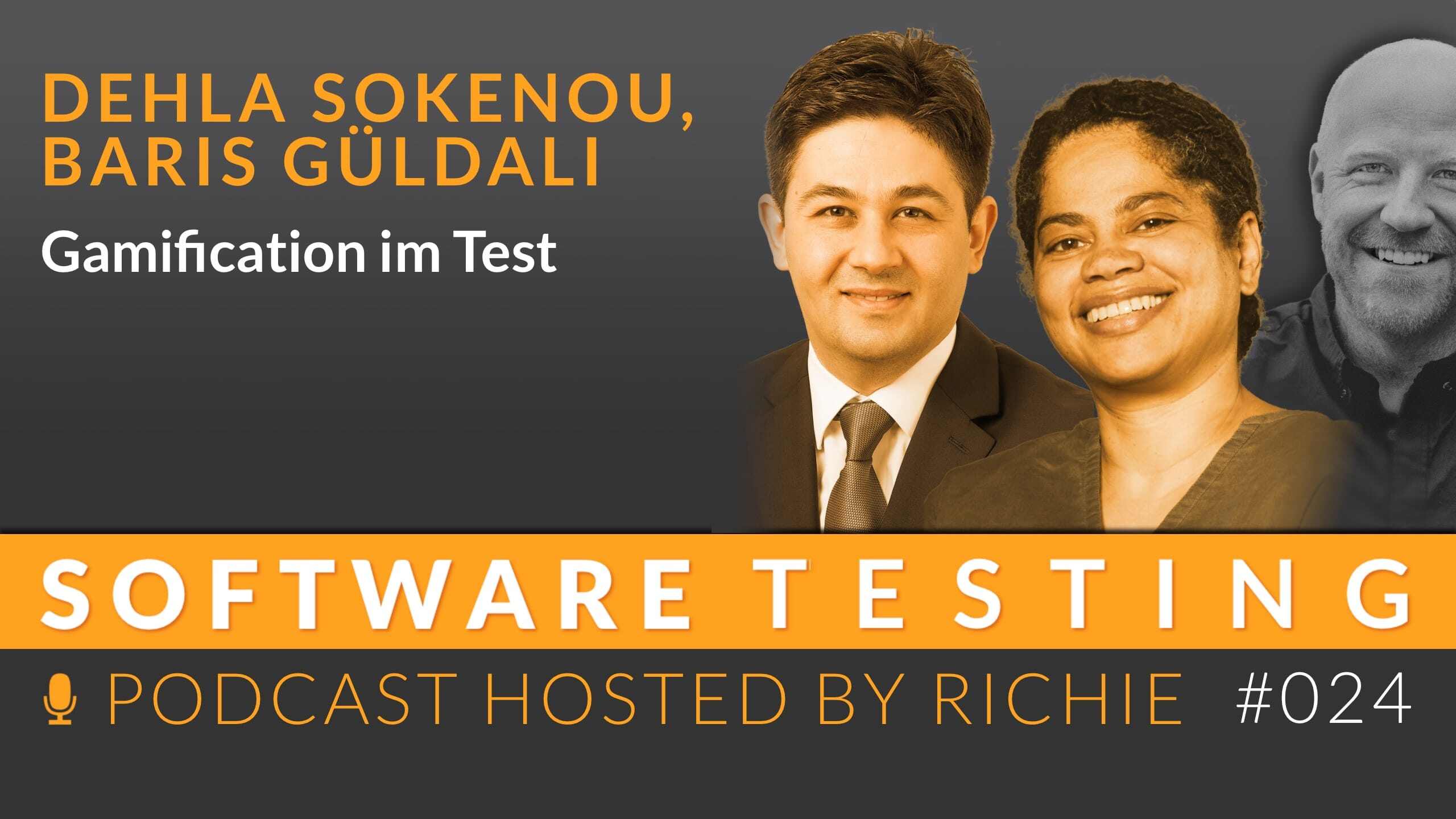
Gamification describes a playful way of working together. And it can also be implemented in software development and testing. The field is wide-ranging: from board games to competitive games - there are so many possibilities. Dehla and Baris talk about their experiences with gamification, what it brings and where you should be careful not to let the fun run into the opposite.
"As children we learn (...) through play, and as an adult you also learn through play. That means if I use gamification approaches where the developers and testers can learn from each other (...) then it sticks much better." - Dehla Sokenou, Baris Güldali
Dr.-Ing. Dehla Sokenou completed her doctorate in 2005 at the TU Berlin on UML-based testing. She feels at home in all phases of software development, but continues to focus on all topics related to quality assurance and testing. At WPS, she works as a test and quality manager and software architect. She is also the spokesperson for the GI specialist group Test, Analysis and Verification of Software (TAV) and on the spokesperson committee of the Innovative Test Methods working group.
Dr. Baris Güldali is a professionally networked method expert for classic and Agile software development with a focus on "agile transformation" and "continuous quality assurance". His focus is on teaching suitable methods, their use and supporting project staff in applying the methods. His in-depth technical knowledge is based on extensive practical experience in quality management and various research activities. In addition to his professional commitment, he is a member of the steering committee of the specialist group Testing, Analysis and Verification of Software (TAV) in the Gesellschaft für Informatik e.V. (GI e.V.).



Gamification enriches the world of software testing. From motivating employees to creative problem solving and learning through play.
As part of the GI-TAV Meeting 2023 in Paderborn, I had the opportunity to talk to Dehla and Baris about an exciting topic: Gamification in software testing. Our conversation revealed how playful elements can not only liven up everyday working life, but also increase productivity. Gamification integrates elements of play into the normal development process to motivate employees and make their working environment more exciting.
Dehla and Baris shared their insights on how gamification increases fun in the workplace while helping people to work better and faster. The logic behind it is simple: when work is fun, people are more motivated and work more effectively. Both in the testing environment and in other operational tasks, gamification can break up deadlocked processes and add variety to everyday testing. This approach seems to be particularly appealing to Generation Z.
Another crucial aspect of gamification is the promotion of creativity and swarm intelligence to deal with growing complexity in projects. Baris mentioned an example of a mistake in the planning of train sizes that could have been avoided through creative gamification approaches. Dehla also emphasized the importance of learning through play: children learn by playing, and adults also benefit from such an approach. By using gamification elements, employees can learn from each other and impart knowledge in a way that sticks better.
A concrete example of gamification in quality management is 'risk-storming'. This is a board game in which risks relating to a test object have to be collected. The aim is to identify risks at an early stage and take appropriate countermeasures. This interactive format not only integrates playful elements into everyday working life, but also promotes team spirit and cooperation.
Baris emphasized that rewards also play an important role in the introduction of gamification elements. Although Dehla noted that the actual reward is often secondary - just the awareness of having contributed to the project's success can serve as a reward - both agree that small incentives such as vouchers or joint team activities can contribute to motivation.
Finally, we talked about the importance of feedback from the community for the further development of gamification methods in software testing. Both Dehla and Baris encouraged people to contribute their own experiences or ideas on the topic. This exchange could lead to the creation of a collection of best practices that can inspire and support other teams.
1 min read
Podcast Episode: Quality from and with Prompt Engineering As a deep learning enigneer, David explores the possibilities of using AI. It's about his...
1 min read
Podcast Episode: Test automation with Selenium Boris is a test automation specialist. In this interview, we talk about the automation framework...
1 min read
Podcast Episode: New Edition of Agile Testing 'So, we don't need testers anymore, because we're working agile now! That was the impetus for writing...