“When everyone blurts out their personal opinion, somebody is always pissed off. We have to learn to deal with that!”
(Richard Seidl)
Ah, everything used to be so much simpler. There was only zero or one. You voted red or black. Watched Roseanne or Lindenstraße on linear TV. Were a Star Wars fan or a Star Trek fan. Were a woman or a man. Believed in science or the church. Used Microsoft Works or Microsoft Office. Individuality came in two flavors, at most. That was the truth we lived.
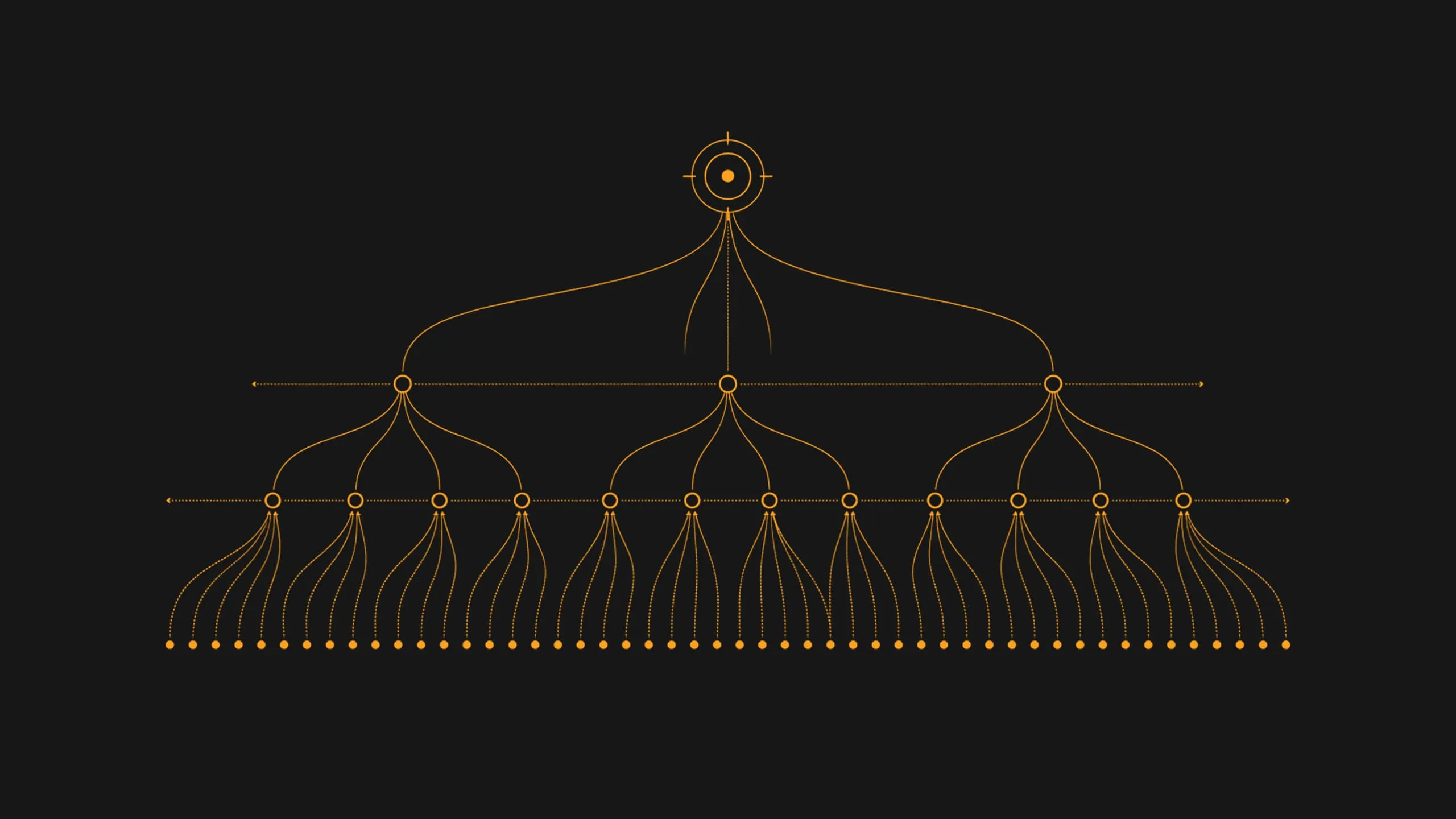
Well, the world has changed quite a bit. The options have become impossible to keep track of. Today everyone can, and is allowed to, live out their very own individuality. You can still tell the parties apart by color, but the manifestos are a different story. Hundreds of TV channels are trying to hold their ground against streaming platforms where I can watch anything, right now, on demand. Hundreds, thousands of series run in parallel. Gender and choice of partner offer a wealth of options, and so do faiths, opinions and spirituality. The market for operating systems and software is a giant buffet, and in November 2023 Hugging Face offered access to 325,901 AI models.
Today we can decide, in every area of life and in fine detail, who we are and what we do, with what and with whom. That is a great achievement of our society, because, loosely following Frederick the Great, everyone “must find happiness in their own fashion”.
But it also brings challenges that we need to keep reminding ourselves of in everyday life. Two of them keep me particularly busy: which opinions we actually get to see, and how much energy it takes to keep deciding everything ourselves.
Challenge 1: Presence
Social media has created platforms where every opinion finds a place and gets heard. That wasn’t the case before. What went into the newspaper was what journalists and editors wrote. Same for radio and TV. Today everyone can put their opinions and their individuality on show on YouTube, TikTok, Instagram, LinkedIn and the like. But what lands in our feeds, and in what quantity, does not reflect how opinions are distributed in society. Too many filters sit on top: content creators, platform algorithms with keywords and profiling, the filter bubbles we move in, confirmation bias, and on and on.
On top of that, there is a loop that keeps feeding itself. If everyone can blurt out their opinion, somebody is always pissed off, pushes back and argues against it in turn. And unfortunately that is where things often get ugly, because our ability to debate and handle conflict is … well … modest …
Challenge 2: Decision
The other point with all these possibilities and options is: which one do I actually want? Where the state, the church and the media used to think and decide for us what was good, today we have to work it out ourselves. That costs our brains a lot of energy, and it stresses us out: what if I make the wrong choice? What will the people around me think? Is this really “me”? And yes, with so many options there often is no right or wrong. Everything has its pros and cons, its good and bad consequences.
In agile projects, people love to sing the praises of “self-responsibility” and “self-organization”. What we forget is what a feat of strength that often is for us humans. It doesn’t run on autopilot. It has to be learned and fed with energy again and again.
And Now? Two Thoughts for Living With Individuality
Two closing thoughts I keep telling myself:
- Be critical of what we hear, read and see. Not in bashing mode, though, but with tolerance and appreciation.
- Deciding in favor of something is rarely final. Closing other doors on purpose frees up a lot of energy.
Because one thing is clear: if you keep every door open, you’ll always be standing in the hallway.